

Preparing for your newborn can feel like navigating a maze of endless product options. Between conflicting advice from family, overwhelming online reviews, and marketing claims promising the "must-have" item, many new parents struggle to identify what their baby truly needs. A focused checklist removes the guesswork by highlighting essentials that prioritize your newborn's comfort, safety, and your daily convenience. This guide walks you through proven criteria for evaluating products and specific items that belong in every nursery, helping you make confident decisions without overspending on unnecessary gear.
Table of Contents
- Key Takeaways
- Criteria for choosing newborn essentials
- Essential clothing and sleeping items for newborns
- Feeding and hygiene essentials for newborn care
- Top newborn gear for safety and transportation
- Find quality newborn essentials at River tot
- Frequently asked questions about newborn essentials checklist
Key Takeaways
| Point | Details |
|---|---|
| Evaluation criteria | Create a simple scoring system to rate items on comfort safety convenience and quality to guide purchasing decisions. |
| Safety standards | Choose products that meet current Consumer Product Safety Commission standards and avoid small detachable parts that could pose choking or finger injuries. |
| Wardrobe basics | Stock six to eight onesies and four to six sleepers to handle frequent messes and night changes. |
| Soft fabrics | Choose breathable materials like organic cotton or bamboo blends and ensure seams lie flat and sizing fits to prevent irritation. |
Criteria for choosing newborn essentials
Selecting the right products for your newborn starts with understanding what makes an item truly essential. You need a framework that cuts through marketing noise and focuses on what actually matters for your baby's wellbeing and your sanity during those first exhausting months.
Comfort sits at the top of your evaluation list. Newborns spend most of their time sleeping and eating, so every item touching their skin should feel soft and non-restrictive. Look for fabrics like organic cotton or bamboo blends that breathe well and prevent overheating. Proper sizing matters too. Items that are too tight can irritate skin, while oversized clothing poses safety risks. Seams should lie flat against the body, and tags should be external or printed to avoid rubbing.
Safety cannot be negotiated. Every product you bring into your home should meet current Consumer Product Safety Commission standards for infant items. Check for secure fastenings that won't come loose, non-toxic materials free from harmful chemicals, and designs that eliminate choking hazards. Avoid products with small detachable parts, loose strings longer than seven inches, or anything that could trap tiny fingers.
Convenience determines whether you'll actually use an item regularly. New parents operate on minimal sleep and maximum stress, so products need intuitive designs. Can you operate it one-handed while holding your baby? Does it clean easily, preferably in a washing machine? Will it fit through your doorways and into your car? These practical questions separate helpful tools from dust collectors. Understanding baby clothing comfort and safety principles helps you evaluate everyday items more effectively.
Quality directly impacts how long items last through multiple washes, diaper blowouts, and constant use. Well-made products withstand the punishment of newborn care without falling apart. Check stitching quality, zipper durability, and fabric weight. Higher quality often means better value over time, even with a higher upfront cost.
Pro Tip: Create a simple scoring system rating each potential purchase on comfort, safety, convenience, and quality. Items scoring high across all four categories deserve priority on your list, while those falling short in multiple areas probably aren't worth the investment.
Essential clothing and sleeping items for newborns
Your newborn's wardrobe needs less variety than you might think but requires specific items in sufficient quantity to handle frequent changes. Babies cycle through outfits quickly due to spit-up, diaper leaks, and general messiness.
Start with six to eight onesies in newborn and 0-3 month sizes. These versatile bodysuits form the foundation of every outfit and work as standalone clothing in warm weather. Choose styles with envelope necklines or side snaps for easier dressing. Kimono-style onesies eliminate the need to pull fabric over your baby's head, which many newborns dislike. Add four to six sleepers or footie pajamas for nighttime. These one-piece outfits keep babies warm without loose blankets and simplify middle-of-the-night changes. Look for two-way zippers that open from the bottom for diaper access without fully undressing your baby.
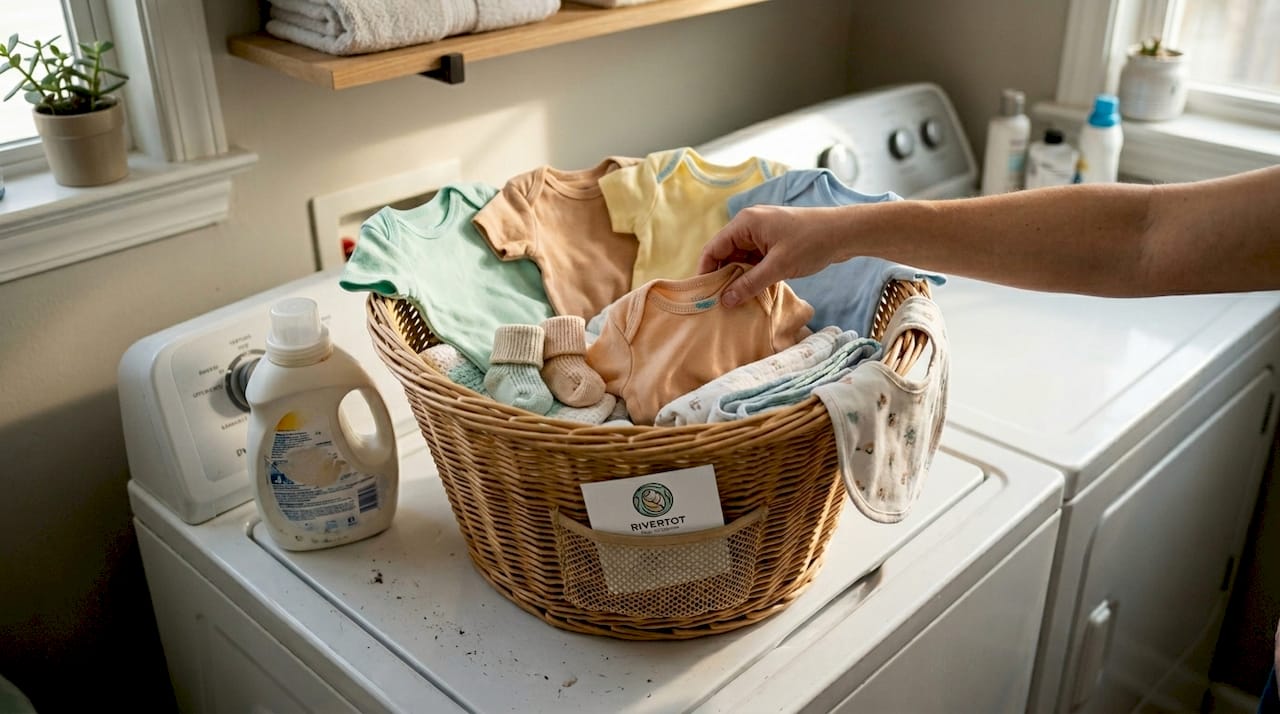
Socks are essential because newborns lose heat quickly through their extremities. Keep six to eight pairs on hand since they disappear mysteriously in laundry. Choose styles with gentle elastic that stays on without leaving marks. Two to three soft cotton hats help regulate temperature, especially important in the first weeks when babies can't control their body heat effectively. Consider newborn baby onesies designed with temperature regulation features.
Fabric selection matters enormously. Organic cotton remains the gold standard for newborn clothing because it breathes naturally and rarely causes irritation. Avoid synthetic materials that trap heat and moisture. Check that all clothing is pre-washed in fragrance-free detergent before your baby wears it. Following a comprehensive baby clothing checklist 2026 ensures you don't overlook important items.
Sleeping essentials focus entirely on safety. The American Academy of Pediatrics recommends a firm crib mattress with a fitted sheet as the only items in your baby's sleep space. Purchase three to four fitted sheets so you always have clean backups. Wearable blankets or sleep sacks replace loose blankets, which pose suffocation risks. Choose appropriate tog ratings based on room temperature. Never use crib bumpers, pillows, stuffed animals, or positioning devices in the sleep area.
| Item | Quantity needed | Key features |
|---|---|---|
| Onesies | 6-8 | Envelope neck, soft cotton, easy snaps |
| Sleepers | 4-6 | Two-way zipper, footie style, breathable |
| Socks | 6-8 pairs | Stay-on design, gentle elastic |
| Hats | 2-3 | Soft cotton, covers ears |
| Fitted crib sheets | 3-4 | Secure fit, breathable fabric |
| Sleep sacks | 2-3 | Appropriate tog, armhole safety |
Pro Tip: Buy most clothing in 0-3 month sizes rather than newborn. Many babies outgrow newborn sizes within weeks, and slightly larger clothing works fine with rolled cuffs.
Feeding and hygiene essentials for newborn care
Feeding supplies vary based on whether you're breastfeeding, formula feeding, or combining both approaches, but certain items help regardless of your method. Having the right tools ready reduces stress during those first feeding attempts.
For bottle feeding, start with four to six bottles in four-ounce sizes. Newborns eat small amounts frequently, so larger bottles aren't necessary initially. Choose bottles with slow-flow nipples designed for newborns to prevent overfeeding and reduce gas. A bottle sterilizer or sterilizing bags simplify cleaning, though you can also boil bottles in a pot. Keep eight to ten burp cloths within reach since babies spit up frequently. These multipurpose cloths also work for wiping faces and protecting your clothing. Bibs become useful around six weeks when drooling increases. La Leche League International emphasizes that proper feeding supplies support successful infant nutrition.
Breastfeeding parents benefit from nursing pillows that support proper positioning and reduce back strain. Two to three nursing bras in comfortable fabrics and breast pads to prevent leaking help you manage the early weeks. A breast pump, whether manual or electric, provides flexibility even if you plan to exclusively breastfeed.
Hygiene essentials keep your baby clean and comfortable between baths. Stock up on fragrance-free baby wipes, purchasing several packs since you'll use them constantly. For the first month, some parents prefer using warm water and soft washcloths on newborn skin. A gentle, tear-free baby shampoo and body wash designed for sensitive skin handles bath time. You only need to bathe newborns two to three times weekly since frequent washing can dry their skin.
A complete baby grooming kit contains specialized tools sized for tiny fingers and delicate skin. Essential grooming items include:
- Baby nail clippers or scissors with rounded tips to safely trim sharp nails
- Soft-bristled brush for cradle cap and gentle scalp massage
- Nasal aspirator to clear stuffy noses without irritation
- Digital thermometer for accurate temperature readings
- Baby-safe moisturizer for dry skin patches
Diapering supplies form a significant part of hygiene essentials. Calculate needing 10-12 diaper changes daily in the first month. Whether you choose disposable or cloth diapers, keep a three-day supply on hand. A changing pad with a washable cover creates a designated changing area. Diaper cream containing zinc oxide prevents and treats diaper rash.
| Feeding method | Essential supplies | Optional but helpful |
|---|---|---|
| Bottle feeding | 4-6 bottles, sterilizer, formula, burp cloths | Bottle warmer, drying rack |
| Breastfeeding | Nursing bras, breast pads, nursing pillow | Breast pump, milk storage bags |
| Combination | All of the above | Supplemental nursing system |
Top newborn gear for safety and transportation
Safety gear protects your baby during transportation and around your home. These items require careful research since they directly impact your child's wellbeing.
An infant car seat is legally required and non-negotiable before leaving the hospital. Choose a rear-facing seat approved by federal standards for newborns, typically accommodating babies from 4 to 35 pounds. Installation matters as much as the seat itself. Many fire stations and police departments offer free car seat installation checks. The seat should not move more than one inch side to side or front to back when properly installed. Harness straps should lie flat without twisting, with the chest clip positioned at armpit level. Never use a car seat past its expiration date or after any accident. Consider a newborn infant car seat that grows with your baby through the first year.
Baby carriers provide hands-free mobility while keeping your newborn close. Soft-structured carriers, wraps, and ring slings each offer different benefits. Wraps work beautifully for newborns because they provide custom support and allow skin-to-skin contact. Structured carriers become easier to use as babies gain head control around three months. Whichever style you choose, ensure it supports your baby's hips in a healthy "M" position with knees higher than their bottom. The carrier should hold your baby close enough to kiss the top of their head and keep airways clear. Explore various baby carrier options to find what works for your body type and lifestyle.
A stroller suitable for newborns either reclines completely flat or accommodates an infant car seat. Test the folding mechanism before purchasing. Can you collapse and open it with one hand? Does it fit in your car trunk? Consider your typical terrain. Larger wheels handle rough sidewalks better, while smaller wheels maneuver easily in stores.
Protective accessories add safety layers throughout your home:
- Outlet covers prevent curious fingers from electrical hazards
- Cabinet locks keep cleaning supplies and medications secure
- Baby monitor with video capability lets you check on your sleeping infant
- Room thermometer ensures appropriate sleeping temperature between 68-72°F
- Nightlight provides visibility for nighttime care without fully waking your baby
Pro Tip: Register your baby gear with manufacturers so you receive safety recall notifications immediately. Check the Consumer Product Safety Commission website monthly for updates on products you own.
Find quality newborn essentials at River tot
Building your newborn essentials checklist becomes simpler when you shop from curated collections designed with parent needs in mind. River tot specializes in baby products that meet the comfort, safety, and convenience criteria discussed throughout this guide.
Our comfortable baby clothes collection features soft, breathable fabrics that protect delicate newborn skin while making dressing easier for tired parents. Each piece is selected for quality construction that withstands frequent washing without losing shape or softness.

Safety gear like our newborn infant car seat meets rigorous federal standards while offering features that simplify daily use. From secure harness systems to easy-clean fabrics, every detail supports both safety and practicality. Our baby grooming kit includes everything you need for gentle newborn care in one convenient package. Shop our complete range of newborn essentials and prepare for your baby's arrival with confidence.
Frequently asked questions about newborn essentials checklist
When should parents start buying newborn essentials?
Start purchasing essentials during your second trimester, around 20-24 weeks. This timeline gives you enough time to research products, compare options, and spread costs across several months without rushing. Have all critical items like car seats, sleeping gear, and basic clothing ready by 36 weeks in case of early arrival.
How many clothing items does a newborn really need?
Plan for 6-8 onesies, 4-6 sleepers, 6-8 pairs of socks, and 2-3 hats as a minimum. This quantity handles daily changes plus laundry delays without requiring constant washing. Buy most items in 0-3 month sizes since newborns outgrow the smallest size quickly, and slightly larger clothing works fine initially.
What safety features are must-haves for newborn gear?
Every product should meet current Consumer Product Safety Commission standards with certification labels visible. Look for secure fastenings that won't detach, non-toxic materials free from harmful chemicals, and designs without small parts that pose choking hazards. Car seats and cribs require the most rigorous safety verification.
How to balance quality and budget in newborn shopping?
Prioritize quality for items impacting safety like car seats, cribs, and monitors where failure could harm your baby. Save money on clothing and accessories that babies outgrow quickly by accepting hand-me-downs or shopping sales. Focus your budget on durable, multi-use items that serve you through the first year. Review comprehensive baby clothing essentials guides to identify where investment matters most.
Are multi-use items recommended for newborns?
Yes, multi-use items often provide better value and reduce clutter. Convertible car seats grow with your child, eliminating the need for multiple purchases. Muslin blankets work as swaddles, burp cloths, nursing covers, and stroller shades. However, ensure multi-use products don't compromise safety or proper fit for newborn-specific needs.