
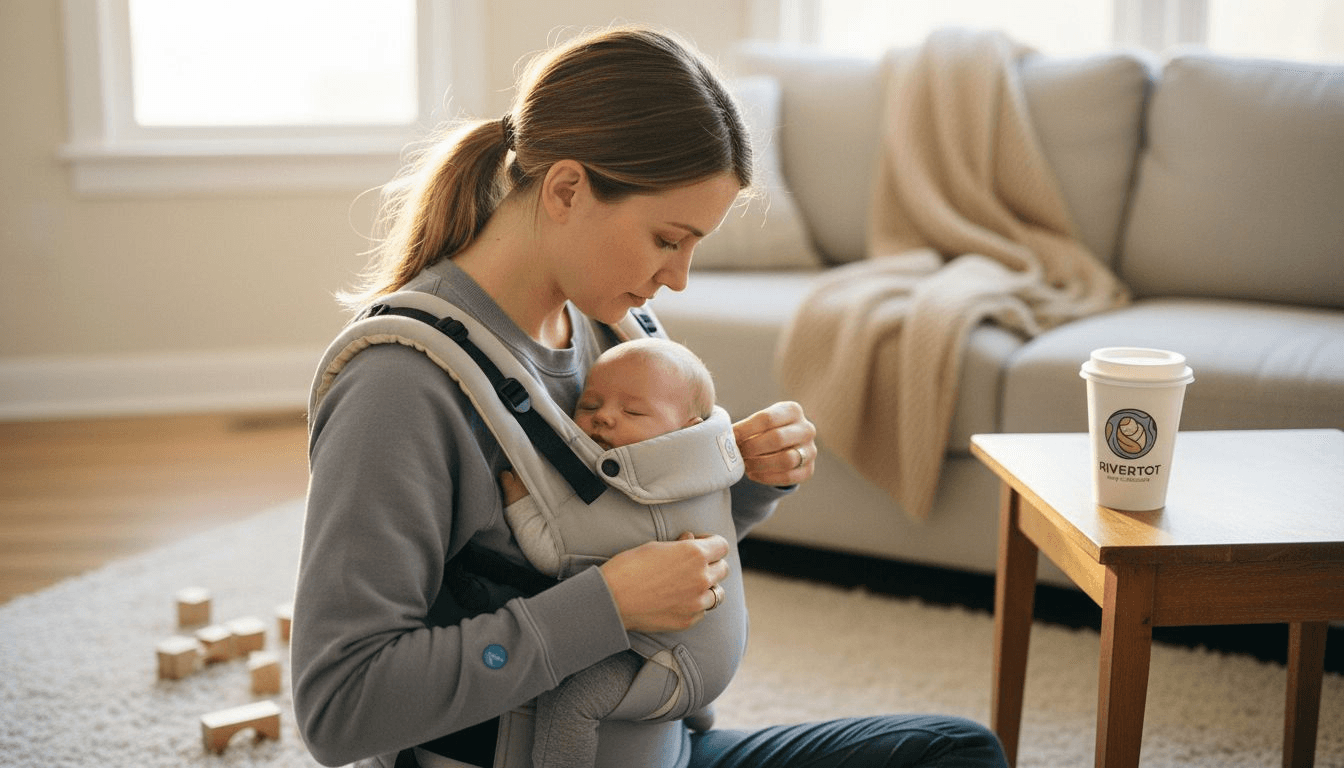
Many parents assume any baby carrier labeled "ergonomic" automatically ensures safety and comfort for their little one. This misconception can lead to choosing products that don't properly support a baby's developing hips and spine. Ergonomic baby gear is specifically designed to promote healthy posture for babies while reducing physical strain on caregivers during daily activities. Understanding what makes baby gear truly ergonomic helps you select products that support your baby's natural development and make parenting easier. This guide explains the essential principles of ergonomic baby gear and how to use it correctly for maximum safety and comfort.
Table of Contents
- Understanding ergonomic baby gear and why it matters
- The critical role of the M-position and healthy hip development
- Types of ergonomic baby gear and suitable age ranges
- Safety and correct usage best practices for ergonomic baby gear
- Explore ergonomic baby gear options at River tot
- What is ergonomic baby gear? FAQs
Key takeaways
| Point | Details |
|---|---|
| Ergonomic design supports healthy development | Proper baby gear promotes safe hip and spine positioning while reducing caregiver strain. |
| M-position is critical for hip health | Babies' knees should sit higher than their bottom to prevent hip dysplasia and support natural joint alignment. |
| Different carriers suit different stages | Newborns need different support than older infants based on head control and developmental milestones. |
| Safety standards matter | ASTM F2907 certification ensures sling carriers meet current best practices for infant safety. |
| Correct usage maximizes benefits | Proper positioning and regular safety checks are more important than product labels alone. |
Understanding ergonomic baby gear and why it matters
Ergonomic baby gear refers to products specifically designed to support a baby's natural posture while distributing weight comfortably across a caregiver's body. Unlike standard baby products that prioritize convenience alone, truly ergonomic gear considers both infant developmental needs and adult biomechanics. The design focuses on maintaining healthy positioning for growing joints and muscles while preventing back pain, shoulder strain, and fatigue for the person carrying the baby.
The benefits of using properly designed ergonomic gear extend beyond basic comfort. Babywearing promotes physical closeness and bonding between parent and child, creating emotional security for infants. You gain hands-free convenience for daily tasks while keeping your baby close and content. Research shows that babies carried in ergonomic positions often cry less and sleep better because they feel secure against a caregiver's body. The proper support also encourages healthy motor skill development as babies experience movement and balance in a safe, supported position.
Good ergonomics in baby carriers are extremely important for both parent and baby wellbeing. Key ergonomic features include:
- Wide, supportive seat base that distributes baby's weight evenly
- Adjustable straps that allow customized fit for different body types
- Padded shoulder and waist straps that prevent digging and discomfort
- Fabric panels that support baby's back without restricting natural spine curve
- Design that keeps baby's weight centered over caregiver's core
Many products claim ergonomic benefits, but positioning matters more than product claims when choosing safe baby gear. A carrier's ability to maintain proper hip and spine alignment determines its true ergonomic value. Simply purchasing an expensive or popular carrier doesn't guarantee your baby is positioned correctly for healthy development.

Pro Tip: Always check if carrier design promotes the M-position for baby's hips to prevent dysplasia. Look for a wide seat that supports your baby's thighs from knee to knee, creating the characteristic M-shape that protects developing hip joints.
Exploring options like ergonomic baby slings helps you find products that genuinely support both you and your baby during everyday activities.
The critical role of the M-position and healthy hip development
The M-position represents the safest and most natural positioning for babies in carriers, crucial for preventing hip problems as they grow. In this position, your baby's knees sit higher than their bottom, with legs spread wide in a squatting position that resembles the letter M when viewed from the front. Ergonomic baby carriers promote healthy hip development by supporting this natural alignment where the baby's knees are higher than their bum. This positioning keeps the hip joint properly seated in the socket, allowing normal development during the critical early months.

Wide-based carriers provide essential support by holding your baby's thighs from knee to knee, creating a seat that naturally encourages the M-position. The fabric or structured seat should be wide enough to support the entire thigh without cutting into the back of baby's knees. The M-position supports natural joint alignment and reduces the risk of hip dislocation by maintaining optimal spacing and angle for the developing hip socket.
| Carrier Type | Hip Position | Thigh Support | Development Impact | | --- | --- | --- | | Wide-based ergonomic | Knees higher than bottom (M-position) | Full support knee to knee | Promotes healthy hip socket formation | | Narrow-based standard | Legs hanging straight down | Minimal or crotch-only support | May increase dysplasia risk | | Wrap or sling (proper use) | Adjustable to M-position | Customizable spread | Supports natural positioning |
Narrow-based carriers can force hips into extension, which is not ideal for hip development and may contribute to problems later. When a baby's legs hang straight down with weight concentrated on the crotch area, the hip joint experiences unnatural stress. This positioning is especially risky for newborns and young infants whose hip sockets are still primarily cartilage and highly moldable.
To verify proper positioning in your carrier, check these key indicators:
- Baby's knees are visibly higher than their bottom when seated
- Thighs are supported in a spread position, not dangling
- Bottom is lower than knees, creating a clear squat position
- Hip angle forms approximately 90-110 degrees from torso
- No pressure or red marks appear behind baby's knees
Pro Tip: Look for carriers designed specifically to promote the M-position and verify proper usage instructions. Take photos of your baby in the carrier from the side and front to check positioning, especially when you're first learning to use new gear. If you're unsure, consult with a certified babywearing educator who can assess your setup.
Products like ergonomic baby carriers and hip seats are specifically engineered to maintain this critical positioning throughout extended wear.
Types of ergonomic baby gear and suitable age ranges
Different types of ergonomic baby gear serve babies at various developmental stages, each designed with specific safety features and positioning requirements. Understanding which gear matches your baby's current abilities ensures both safety and comfort during everyday use. The main categories include soft structured carriers, sling carriers, framed hiking carriers, and supportive baby bouncers, each with distinct age recommendations and ergonomic considerations.
| Carrier Type | Recommended Age | Head/Neck Control Needed | Key Ergonomic Features | | --- | --- | --- | | Soft structured (buckle) | 4-6 months and up (or newborn with insert) | Strong head and neck control | Padded straps, adjustable panels, structured hip support | | Ring sling or wrap | Newborn and up | Can be used from birth with proper technique | Adjustable fabric, customizable tightness, close body contact | | Framed hiking carrier | 6-9 months and up | Full head, neck, and trunk control plus independent sitting | Rigid frame, sun shade, storage, elevated seating | | Baby bouncer (ergonomic) | Newborn to 6 months | Varies by model, some support newborns | Recline positions, proper spine curve, limited duration use |
Soft structured carriers are suitable for babies around 4 to 6 months old once they have strong head and neck control, or earlier with an infant insert. These buckle carriers offer convenience and structure, making them popular for parents who want quick on and off capability. The structured panels and adjustable straps provide consistent ergonomic positioning without requiring complex wrapping techniques.
Sling carriers and wraps offer the most versatility across age ranges because the fabric can be adjusted to provide exactly the right amount of support for your baby's current stage. Newborns can be safely carried in slings when positioned correctly with proper head and airway support. As babies grow, you can adjust the fabric to accommodate their increasing size and mobility while maintaining the M-position. A new ASTM International standard represents current best practices in the design, performance, labeling and instructions for infant slings, helping parents identify quality products.
Framed hiking carriers should only be used once the baby has full head and trunk control and can sit independently, typically around 6 to 9 months and up. These carriers are designed for outdoor activities and longer adventures where the rigid frame distributes weight efficiently across your hips and shoulders. The elevated seating position gives babies an excellent view while the frame keeps their weight off your back.
When selecting age-appropriate ergonomic gear, follow these safety guidelines:
- Never use carriers designed for older babies with newborns who lack head control
- Check manufacturer weight limits and don't exceed them
- Verify your baby meets developmental milestones before upgrading to less supportive carriers
- Replace infant inserts with regular panels once your baby outgrows them
- Observe your baby's comfort and adjust or change carriers if they seem cramped or uncomfortable
Options like multifunctional baby carriers grow with your baby by offering multiple carrying positions suitable for different developmental stages.
Safety and correct usage best practices for ergonomic baby gear
Using ergonomic baby gear correctly maximizes safety benefits and comfort for both you and your baby during daily activities. Even the most well-designed carrier can become unsafe if positioned improperly or used during inappropriate activities. Following established safety protocols and checking your setup regularly prevents accidents and ensures your baby develops healthy posture habits.
Safe babywearing involves positioning the baby in a physiological position, correct back and hip positioning, proper tightening of the carrier, and ensuring the baby's head is supported and airways are clear. Follow this step-by-step checklist each time you put your baby in a carrier:
- Position baby in the carrier with knees higher than bottom in M-position
- Tighten all straps and panels so baby sits snug against your body
- Check that baby's back is supported in natural C-curve, not slumped
- Verify baby's face is visible and turned to the side, never pressed into fabric or your body
- Ensure baby's chin is off their chest with at least two finger widths of space
- Adjust shoulder and waist straps so weight distributes evenly across your body
- Do a final check that baby can breathe freely and all buckles are secure
The baby's position in the carrier is crucial for safety and comfort, with face visible and airways clear at all times. Your baby should be close enough to kiss on the head when you look down. This "close enough to kiss" rule helps ensure proper positioning and allows you to monitor your baby's breathing and comfort throughout wear.
Daily safety precautions include these essential practices:
- Check carrier fabric and straps for wear, tears, or loose stitching before each use
- Avoid wearing baby while cooking, near hot surfaces, or handling hot liquids
- Never wear baby during activities requiring quick movements or balance challenges
- Remove dangling jewelry or scarves that baby could grab or become tangled in
- Stay alert and avoid drowsy babywearing when you might fall asleep
- Bend at the knees, not the waist, when picking things up while wearing baby
The safest carrier fits both your baby and your body; positioning matters more than product claims.
Avoid babywearing while cooking, near hot surfaces, when drowsy, or during risky activities that could endanger your baby. The convenience of babywearing should never compromise safety by exposing your baby to unnecessary hazards. If an activity requires your full attention or involves potential dangers, place your baby in a safe location like a crib or play yard instead.
Regularly inspect your carrier for signs of wear that could compromise safety. Check buckles for cracks, examine fabric for thin spots or tears, and ensure all adjustment mechanisms work smoothly. Replace carriers that show significant wear rather than risking failure during use. Proper maintenance extends the life of your gear and keeps your baby secure.
Complementing your babywearing setup with products like baby protective pillows provides additional safety for when your baby isn't being carried.
Explore ergonomic baby gear options at River tot
Finding the right ergonomic baby gear makes a significant difference in your daily parenting experience and your baby's healthy development. River tot offers a carefully curated selection of ergonomic baby carriers and accessories designed with both safety and comfort as top priorities. Each product is chosen to support the healthy positioning principles discussed throughout this guide while providing the durability and ease of use that modern parents need.

Browse our collection of ergonomic baby carriers that promote proper hip positioning and distribute weight comfortably across your body. Whether you're looking for everyday carriers for quick errands or more specialized options for extended wear, you'll find products engineered to support your baby's natural posture. Our 3-in-1 ergonomic baby carriers adapt as your baby grows, offering multiple carrying positions that maintain the critical M-position throughout different developmental stages. Complete your babywearing setup with comfortable baby clothes that work seamlessly with carriers, ensuring your little one stays cozy during every adventure together.
What is ergonomic baby gear? FAQs
What does ergonomic baby gear mean for new parents?
Ergonomic baby gear refers to products designed to support a baby's natural body position while reducing physical strain on caregivers. These products maintain healthy hip and spine alignment for developing babies while distributing weight comfortably across the adult's body.
How can I tell if a baby carrier is truly ergonomic?
Check if the carrier supports your baby in the M-position with knees higher than their bottom and thighs supported from knee to knee. The carrier should hold your baby close to your body with their back in a natural C-curve and provide adjustable, padded straps that distribute weight across your shoulders and hips.
At what age can I start using ergonomic baby carriers safely?
You can use properly designed slings and wraps from birth if used correctly with newborn-specific positioning. Soft structured carriers typically require babies to be 4-6 months old with strong head and neck control, though some work earlier with infant inserts. Framed hiking carriers are only safe once babies can sit independently, usually around 6-9 months.
What are the most important safety tips for daily ergonomic carrier use?
Always ensure your baby's face is visible and airways are clear with chin off their chest. Keep your baby close enough to kiss on the head, tighten all straps so baby sits snug against your body, and avoid wearing your baby during cooking, near heat sources, or when drowsy. Check your carrier regularly for wear and damage.
Why does the ASTM F2907 standard matter when choosing baby slings?
The ASTM F2907 standard establishes safety requirements for infant sling design, performance, and labeling based on current best practices. Carriers meeting this standard have been tested for structural integrity, safe positioning, and clear usage instructions, helping you identify products that meet recognized safety benchmarks for protecting your baby.
Can ergonomic baby gear really prevent hip problems in babies?
Yes, carriers that maintain the M-position support healthy hip socket development by keeping the joint properly aligned during the critical early months. Narrow-based carriers that allow legs to hang straight down can increase hip dysplasia risk, while wide-based ergonomic carriers promote the natural spread-squat position that protects developing hips.
Recommended
- UV protection baby gear: Guide to safe outdoor infants – River tot
- ComfyBumpy Ergonomic Baby Bouncer Seat - Safe, Portable Bouncing Chair with Adjustable Height Positions - Infant Bouncy Seat Perfect for Newborn Babies (Oatmeal) - River tot - - River tot keywords
- Portable Baby Bouncer Seat for Infants, 0-18 Months, 3 Modes of Use with Rocker & Stationary Options, Ergonomic Infant Chair with Hanging Toys – Grey - River tot - - River tot keywords
- Baby clothing checklist 2026: essentials for comfort – River tot
- Beugelstoel ouderen: comfort, veiligheid en gebruik 2026 – Finlandic