

Breathability in baby clothing refers to fabric's ability to allow air and moisture vapor to pass through, preventing heat and sweat buildup on delicate skin. Babies are ten times more sensitive to heat than adults, making fabric choice critical for their comfort and health. Poor breathability increases risks of overheating, skin irritation, and heat rash. This guide explains why breathable fabrics matter and helps you choose the best clothes to keep your baby comfortable, safe, and happy throughout the day.
Table of Contents
- What does breathability in baby clothes mean?
- How breathability affects baby's skin and body temperature
- Common misconceptions about breathability in baby fabrics
- Comparison of baby clothing materials based on breathability
- How to identify and choose breathable baby clothes
- Seasonal considerations for breathable baby clothing
- Breathability and sensitive skin: special considerations
- Summary: why prioritizing breathability improves baby comfort and health
- Explore breathable baby clothes for your little one
Key takeaways
| Point | Details |
|---|---|
| Breathable fabrics regulate temperature | They allow air circulation and moisture escape, preventing overheating and maintaining optimal body temperature for infants. |
| MVTR measures breathability | Moisture vapor transmission rate indicates how well fabric releases trapped moisture, with higher values meaning better breathability. |
| Natural fibers excel | Organic cotton and bamboo offer superior breathability, moisture wicking, and antibacterial properties compared to most synthetics. |
| Softness doesn't equal breathability | Fabric structure and weave matter more than softness alone for airflow and moisture management. |
| Breathability reduces skin problems | Proper air circulation minimizes rashes, irritation, and bacterial growth on sensitive baby skin. |
What does breathability in baby clothes mean?
Breathability describes how effectively fabric allows air and moisture vapor to move through its structure. For baby clothing, this means garments that let body heat escape while allowing fresh air to reach the skin. The technical measure for this property is moisture vapor transmission rate (MVTR), typically expressed in grams per square meter per day.
Fabrics with high MVTR values allow better air circulation, helping regulate your baby's body temperature naturally. When moisture vapor escapes efficiently, sweat doesn't accumulate against the skin. This prevents the damp, sticky feeling that causes discomfort and creates environments where bacteria thrive.
Breathability depends on several fabric characteristics:
- Fiber type and structure (natural fibers typically breathe better)
- Weave density and pattern (looser weaves allow more airflow)
- Fabric weight and thickness (lighter materials generally breathe better)
- Chemical treatments or coatings (these often reduce breathability)
- Blend composition (mixing fibers affects overall performance)
For babies, breathable clothing maintains skin health by keeping moisture levels balanced. Their delicate skin needs constant air circulation to stay dry and comfortable. Without proper breathability, trapped heat and moisture create perfect conditions for rashes and irritation. Understanding breathability helps you make informed choices when choosing baby clothing for comfort and health.
How breathability affects baby's skin and body temperature
Babies possess underdeveloped temperature regulation systems compared to adults. Their bodies cannot efficiently cool down through sweating, making them rely heavily on clothing to maintain comfortable temperatures. Babies are ten times more sensitive to heat, which dramatically increases their risk of heat-related discomfort and health issues.
Non-breathable fabrics trap body heat and moisture against the skin, creating a microclimate that promotes bacterial growth. This trapped environment leads to several problems:
- Heat rash develops when sweat ducts become blocked
- Bacterial infections increase in warm, moist conditions
- Eczema flare-ups worsen with excess moisture and friction
- General discomfort causes fussiness and sleep disruption
- Overheating risks increase, particularly during sleep
Breathable fabrics actively prevent these issues by maintaining airflow. When air circulates freely, excess heat dissipates naturally. Moisture evaporates instead of pooling on the skin surface. This keeps your baby's skin dry, reducing friction that causes chafing and irritation.

The skin barrier in infants is significantly thinner than in adults, making it more permeable and vulnerable to irritants. Breathable clothing protects this delicate barrier by minimizing exposure to moisture and heat stress. Parents who prioritize breathability often notice fewer diaper rashes, less chest and back irritation, and calmer, more comfortable babies overall.
Pro Tip: Feel the back of your baby's neck to check temperature. If it's sweaty or hot, they're likely overdressed in non-breathable fabrics.
Common misconceptions about breathability in baby fabrics
Many parents mistakenly believe that soft fabrics automatically breathe well. Softness relates to fiber fineness and fabric finish, not airflow capacity. Fleece feels incredibly soft yet traps heat and moisture due to its dense, insulating structure. Conversely, some coarser natural fabrics like linen breathe exceptionally well despite feeling less plush.
Another widespread myth suggests all natural fibers offer equal breathability. Reality is more nuanced:
- Organic cotton breathes well but varies based on weave density
- Wool provides excellent temperature regulation but can irritate sensitive skin
- Silk breathes beautifully but requires delicate care unsuitable for babies
- Linen offers superior breathability but wrinkles easily and feels rough
Synthetic fabrics also suffer from unfair generalizations. While many polyester and nylon fabrics trap heat, modern athletic synthetics incorporate moisture-wicking technologies that enhance breathability. Some synthetic blends actually outperform poorly constructed natural fabrics in airflow and moisture management.
Parents often assume thicker fabrics provide better protection without considering breathability trade-offs. Heavy fabrics do offer warmth, but they can cause overheating if they lack proper ventilation properties. The key is finding fabrics that balance insulation with air circulation appropriate for the season and activity level.
Understanding these misconceptions empowers you to evaluate fabrics based on actual performance rather than assumptions. Check fabric composition, feel the weave structure, and consider how garments perform in real-world conditions rather than relying on marketing claims alone.
Comparison of baby clothing materials based on breathability
Different fabrics offer varying breathability levels, making material choice crucial for baby comfort. Here's how common baby clothing fabrics compare:
| Fabric Type | MVTR (g/m²/day) | Breathability | Key Benefits | Considerations |
|---|---|---|---|---|
| Organic Cotton | 15-20 | Excellent | Hypoallergenic, soft, widely available | Can retain moisture if not blended properly |
| Bamboo | 20-25 | Superior | Antibacterial, ultra-soft, moisture-wicking | More expensive, requires careful washing |
| Polyester | 5-10 | Poor to Fair | Durable, quick-drying, affordable | Traps heat, can cause irritation |
| Cotton-Polyester Blend | 10-15 | Good | Balances breathability and durability | Performance depends on blend ratio |
| Nylon | 3-8 | Poor | Strong, lightweight, stretchy | Minimal breathability, best for outer layers |
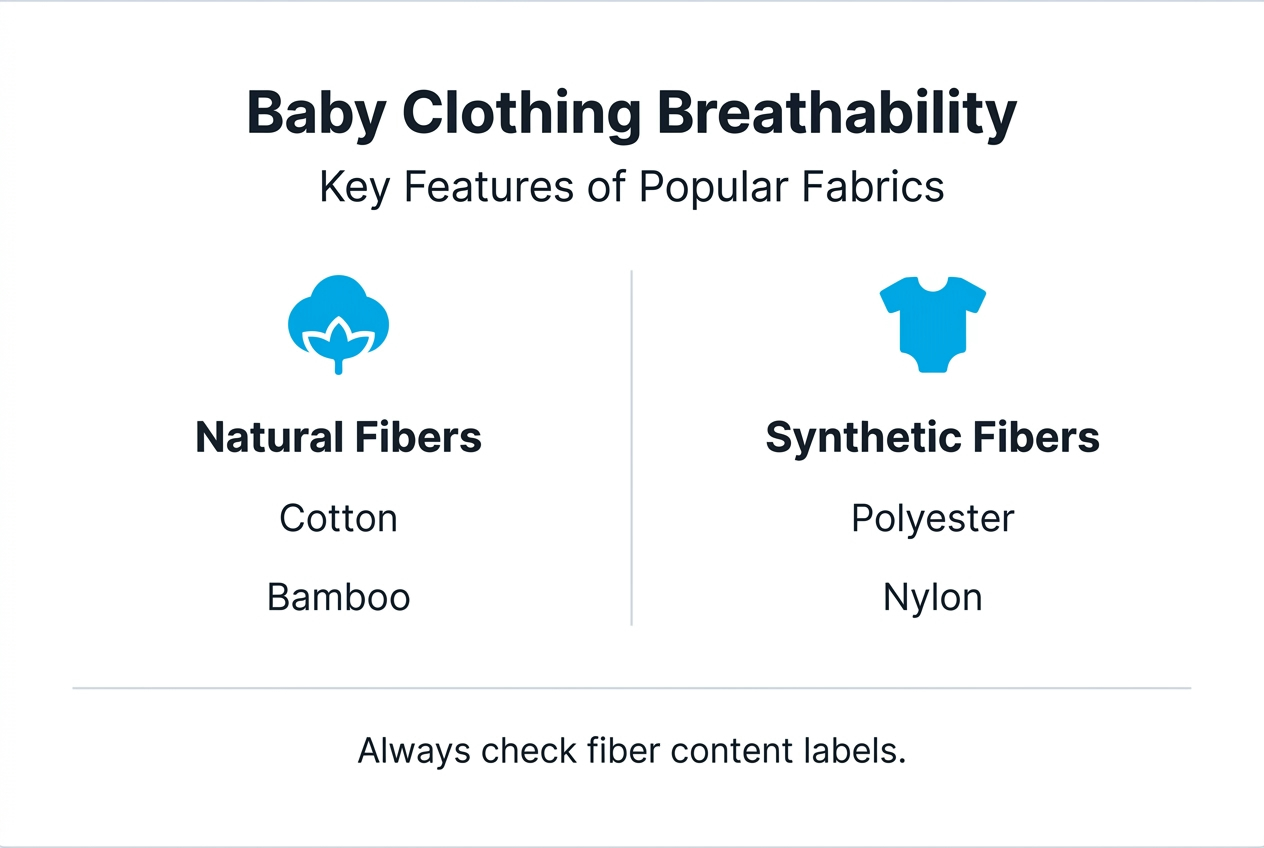
Organic cotton remains a top choice for everyday baby wear due to its natural breathability and gentle touch. It allows steady air circulation while absorbing excess moisture from skin. Cotton baby blankets demonstrate this fiber's versatility for various baby products.
Bamboo fabrics provide higher breathability and antibacterial benefits compared to cotton, naturally reducing bacterial growth by approximately 50%. This makes bamboo particularly valuable for babies prone to skin irritation or those living in humid climates. The fiber structure creates microscopic gaps that enhance airflow while wicking moisture away from skin surfaces.
Synthetic materials like polyester and nylon generally score lower in breathability tests. Their tightly constructed fibers limit air passage and trap perspiration. However, modern athletic blends sometimes incorporate ventilation technologies that improve performance beyond traditional synthetics.
Pro Tip: Check garment labels for fiber content percentages. Fabrics with at least 70% natural fibers typically breathe better than synthetic-heavy blends.
How to identify and choose breathable baby clothes
No standardized breathability labeling exists for baby clothing, placing the responsibility on parents to assess fabric quality. Start by examining fabric composition on care labels. Natural fibers like organic cotton, bamboo, and linen typically indicate better breathability than synthetic alternatives.
Feel the fabric texture and weight. Lightweight materials with visible or tactile weave patterns usually allow more airflow than dense, heavy fabrics. Hold the garment up to light. If light passes through easily, air likely circulates well too. Fabrics that block light completely often trap heat and moisture.
Consider these practical selection criteria:
- Choose loose-weave fabrics over tight, dense constructions
- Avoid garments with waterproof coatings or plastic-backed layers
- Select natural, undyed fabrics when possible to minimize chemical treatments
- Look for certifications like GOTS (Global Organic Textile Standard) indicating quality natural fibers
- Test fabric against your own skin to gauge comfort and airflow
Pay attention to garment construction beyond fabric choice. Tight elastic bands, multiple layers, and restrictive designs limit air circulation regardless of material. Opt for simple, well-fitted designs that allow movement and don't constrict airways around the neck or chest.
Read reviews from other parents about how garments perform in real conditions. They often mention whether babies seem comfortable, whether clothes cause sweating, or if skin issues improved after switching fabrics. This practical feedback helps you make informed decisions based on actual performance rather than marketing promises.
For comprehensive guidance on fabric selection and safety, review this baby clothing comfort guide covering multiple factors beyond breathability.
Seasonal considerations for breathable baby clothing
Breathable fabrics remain important year-round, but seasonal adjustments optimize comfort and safety. Summer demands maximum airflow to prevent overheating, while winter requires breathable layers that maintain warmth without trapping excessive moisture.
Summer breathability strategies:
- Use single-layer garments in lightweight cotton or bamboo
- Choose loose-fitting styles that don't cling to skin
- Opt for light colors that reflect rather than absorb heat
- Avoid synthetic fabrics that intensify sweating
Winter presents different challenges. Babies need warmth without moisture buildup from trapped sweat. Breathable layering prevents overheating while maintaining comfortable temperatures. Use this layering sequence:
- Base layer: breathable cotton or bamboo bodysuit
- Middle layer: natural fiber sweater or cardigan
- Outer layer: wind-resistant but breathable jacket
Adjust layers based on temperature and activity. Remove layers if your baby's neck feels warm or sweaty. Indoor heating often requires fewer layers than parents expect. Many babies become overheated inside homes during winter months due to excessive layering combined with warm indoor temperatures.
Temperature guidelines help determine appropriate clothing:
- Above 75°F: single breathable layer
- 65-75°F: light long sleeves or short sleeves with breathable pants
- 55-65°F: two breathable layers
- Below 55°F: three breathable layers with appropriate outer protection
For comprehensive seasonal planning, consult this baby clothing checklist 2026 covering year-round essentials. When outdoors, also consider UV protection baby gear that maintains breathability while shielding delicate skin.
Breathability and sensitive skin: special considerations
Babies with sensitive skin, eczema, or dermatitis benefit enormously from breathable fabric choices. These conditions worsen when skin stays moist and warm for extended periods. Breathable clothing creates an environment that minimizes flare-ups and promotes healing.
Sensitive skin requires special attention to fabric properties:
-
Bamboo's natural antibacterial qualities reduce irritant exposure
-
Organic cotton lacks harsh chemicals found in conventionally grown cotton
-
Moisture-wicking fabrics prevent the damp conditions that trigger eczema
-
Smooth, flat seams minimize friction against inflamed skin
For babies with existing skin conditions, breathability becomes even more critical than for typical infants. Trapped moisture and heat accelerate bacterial colonization of compromised skin barriers. This leads to infections, increased inflammation, and prolonged healing times.
Parents managing sensitive skin should prioritize natural fibers processed without harsh chemicals. Conventional cotton often contains pesticide residues and chemical finishes that irritate reactive skin. Organic and naturally processed fabrics eliminate these triggers while maintaining excellent breathability.
Combine breathable clothing with appropriate skincare. Natural baby skin care products work synergistically with breathable fabrics to protect and heal sensitive skin. This comprehensive approach addresses both external clothing factors and direct skin treatment.
Monitor your baby's skin response to different fabrics. Keep notes about which materials cause reactions and which allow skin to stay calm and clear. This personal data helps you make increasingly precise fabric choices tailored to your baby's specific needs.
Summary: why prioritizing breathability improves baby comfort and health
Breathability stands as a fundamental factor in baby clothing selection, directly impacting thermal regulation, skin health, and overall comfort. Fabrics that allow air circulation and moisture escape prevent the heat and dampness that cause rashes, irritation, and bacterial growth on delicate infant skin.
Understanding breathability requires looking beyond surface qualities like softness:
- Fabric structure and fiber composition determine actual breathability
- Natural fibers generally outperform synthetics in moisture management
- Proper weave density balances airflow with appropriate coverage
- Seasonal adjustments maintain comfort across changing temperatures
Dispelling common myths empowers better purchasing decisions. Soft doesn't automatically mean breathable. Natural doesn't guarantee performance without considering weave and construction. Synthetic doesn't always trap heat if modern moisture-wicking technologies are incorporated.
For babies with sensitive or eczema-prone skin, breathability becomes essential rather than optional. The right fabric choice can dramatically reduce skin problems, minimize medication needs, and improve quality of life for both baby and parents.
Applying breathability principles throughout the year keeps babies comfortable regardless of season. Summer demands maximum airflow through lightweight single layers. Winter requires breathable layering that maintains warmth without moisture buildup. Understanding these seasonal needs helps you build a functional wardrobe that serves your baby's changing requirements.
By making informed fabric choices based on breathability science rather than marketing claims, you create a healthier, more comfortable environment for your baby's developing body and sensitive skin. This investment in quality, breathable clothing pays dividends through better sleep, fewer skin issues, and happier daily experiences. For practical application, explore comfortable baby one-pieces designed with breathability principles in mind.
Explore breathable baby clothes for your little one
Now that you understand how breathability impacts your baby's comfort and health, it's time to put this knowledge into practice. River tot offers carefully curated baby clothing made from breathable, natural fabrics designed specifically for delicate infant skin and developing temperature regulation systems.

Our baby bright comfortable baby clothes collection features lightweight, breathable designs that keep your little one cool and comfortable throughout active days. Each piece is crafted from materials that allow proper air circulation while maintaining the softness babies need. For everyday essentials, our organic cotton baby bodysuit combines superior breathability with hypoallergenic properties, making it perfect for sensitive skin. Explore the complete range at River TOT to find breathable solutions for every season and activity.
FAQ
What fabrics are the most breathable for baby clothes?
Organic cotton and bamboo rank as the most breathable fabrics for baby clothing. Bamboo offers slightly superior performance with higher moisture vapor transmission rates and natural antibacterial properties. Both materials provide excellent airflow, moisture wicking, and gentle contact for sensitive infant skin.
How can I tell if baby clothes are breathable when shopping?
Look for lightweight natural fibers with visible or loose weave patterns in the fabric structure. Check labels for high percentages of cotton, bamboo, or linen rather than polyester or nylon. Hold garments up to light; if light passes through easily, the fabric likely breathes well. For detailed selection guidance, review this baby clothing comfort guide.
Are breathable baby clothes suitable for winter months?
Yes, breathable fabrics work exceptionally well during winter when layered properly. They prevent overheating and moisture buildup that occurs when babies sweat under heavy, non-breathable materials. Use multiple breathable layers instead of single thick garments to balance warmth with air circulation. Check this baby clothing checklist 2026 for seasonal layering strategies.
Does breathable clothing prevent all heat rashes?
Breathable clothing significantly reduces heat rash occurrence but doesn't guarantee complete prevention. Other factors like ambient temperature, activity level, and individual skin sensitivity also contribute. However, proper breathability addresses the primary cause of heat rash by preventing moisture and heat accumulation against the skin.
Can synthetic fabrics ever be breathable for babies?
Some modern synthetic blends incorporate moisture-wicking technologies that improve breathability beyond traditional polyester or nylon. However, pure natural fibers generally perform better for babies. If choosing synthetic blends, ensure natural fibers comprise at least 70% of the fabric composition for adequate breathability.
Recommended
- How to choose baby clothing for comfort and safety – River tot
- Comfortable Baby One-Pieces: Tips for Choosing Stylish Outfits – River tot
- Baby clothing checklist 2026: essentials for comfort – River tot
- Baby Cloth Diapers Soft And Comfortable Baby Diapers - River tot - 0 - SPOD - CYOkeywords
- Functional Clothing – Πώς Επηρεάζει Το Στιλ Και Την Άνεση - Judah Club
- Aira | Dreiteiliges Bequemes Set – Stilvolle Eleganz und Höchster Komfort - Beiermode.de