
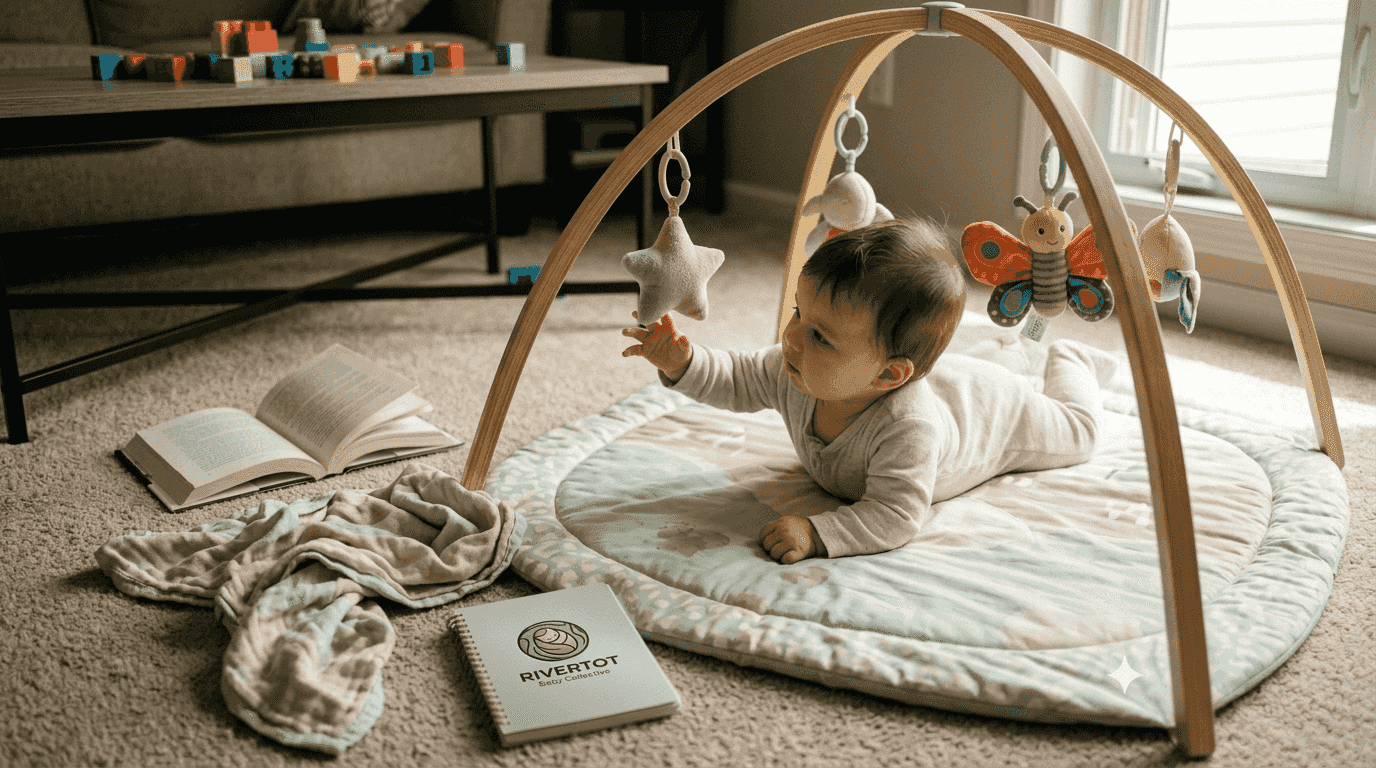
Many parents wonder if baby activity gyms are just fancy playmats or if they actually contribute to infant development. The truth is, activity gyms are purposefully designed developmental tools that engage babies through sensory stimulation and motor challenges. Unlike simple mats, they feature overhead frames with hanging toys that encourage reaching, grasping, and visual tracking. This guide explains what activity gyms truly offer, how they support early growth, and what parents should consider when choosing one. You'll learn evidence-based benefits, safety essentials, and practical usage tips to maximize your investment in your baby's developmental journey.
Table of Contents
- What is a baby activity gym and how does it help infant development?
- How to choose the right baby activity gym for your infant's age and safety
- The developmental impact of baby activity gyms: evidence from recent studies
- How to use a baby activity gym effectively to support your child's growth
- Discover developmental play solutions at Rivertot
- Frequently asked questions
Key takeaways
| Point | Details |
|---|---|
| Developmental tool | Activity gyms provide structured sensory and motor stimulation through interactive hanging toys and textured surfaces. |
| Age-appropriate design | Newborns need minimal, high-contrast elements while older infants benefit from varied textures and complex toys. |
| Safety essentials | Look for stable frames, non-toxic materials, and rounded edges to protect your baby during play. |
| Research-backed benefits | Studies confirm gyms improve fine and gross motor skills, sensory integration, and prelinguistic development. |
| Daily integration | Start with short sessions and gradually increase playtime as your baby grows and shows interest. |
What is a baby activity gym and how does it help infant development?
A baby activity gym consists of a padded mat with an overhead frame holding hanging toys designed to engage babies visually and physically. These structures create an intentional environment where infants can explore textures, sounds, and colors while lying on their backs or tummies. Activity gyms facilitate early sensory and motor skill development by providing a stimulating environment that encourages interaction. The overhead toys dangle at strategic heights to motivate babies to reach, swat, and grasp, building crucial motor pathways.
The developmental benefits extend beyond simple entertainment. When babies interact with hanging toys, they learn cause and effect: a kick makes a toy move, a swat produces sound. This cognitive connection strengthens neural pathways and builds problem-solving foundations. Baby gyms facilitate early sensory and motor skill development through interactive features that respond to infant actions. Visual tracking exercises strengthen eye muscles and coordination as babies follow moving objects across their field of vision.
Sensory stimulation through varied textures, sounds, and colors fosters cognitive growth during critical early months. Different materials on the mat and toys expose babies to tactile experiences that inform their understanding of the physical world. Crinkly fabrics, smooth mirrors, and soft plush elements each provide unique sensory input. The combination of visual, auditory, and tactile stimulation creates a rich learning environment that supports multiple developmental domains simultaneously.
Interactive features on interactive baby play mats include mirrors for self-recognition, rattles for auditory feedback, and textured elements for tactile exploration. These components work together to create comprehensive developmental experiences. Mirrors help babies begin recognizing themselves, a critical milestone in self-awareness. Rattles and musical elements teach auditory discrimination and rhythm perception.
Pro Tip: Position toys within your baby's reach to motivate movement and motor output. Adjust toy heights as your infant grows to maintain appropriate challenge levels. Toys placed too far away frustrate babies, while those too close offer insufficient motivation. The sweet spot encourages effort without causing distress, promoting optimal motor development through natural motivation.
How to choose the right baby activity gym for your infant's age and safety
Newborn gyms should feature minimal stimulation with high-contrast black and white elements to match their developing vision. Young infants see contrast better than color, making bold patterns more engaging and developmentally appropriate. Age-appropriate designs are crucial for maximizing fun and engagement in play gyms. Short sessions of two to three minutes, repeated three times daily, provide sufficient stimulation without overwhelming newborns. Their attention spans and physical endurance are limited, so brief, frequent interactions work best.
Older infants need gyms with varied textures and toys that encourage reaching and grasping as their motor skills advance. By three to four months, babies can track objects smoothly and coordinate hand movements toward targets. Gyms for this age group should include toys at different heights and distances to challenge developing skills. Toys that make sounds when touched provide immediate feedback that reinforces motor efforts and teaches cause and effect relationships.
Essential safety features protect infants during play and give parents peace of mind. Safety features like sturdy frames, non-toxic materials, and rounded edges are essential for a safe play environment. Stable frames prevent tipping if babies grab or pull on hanging toys. Non-toxic, BPA-free materials ensure safety if babies mouth toys or fabric elements. Smooth, rounded edges eliminate sharp points that could cause injury during active play.

The following table compares key features for different age groups:
| Feature | Newborn (0-3 months) | Older infant (3-6+ months) | | --- | --- | | Visual elements | High-contrast black and white patterns | Bright colors and varied patterns | | Toy complexity | Simple shapes, minimal elements | Multiple textures, sounds, and moving parts | | Session duration | 2-3 minutes, three times daily | 10-15 minutes or longer as tolerated | | Mat padding | Soft, supportive surface | Thicker padding for active movement | | Toy positioning | Within easy view, limited reach | Varied heights to encourage reaching |
When evaluating gyms, check for secure attachment points where toys connect to the frame. Loose connections create choking hazards if toys detach. Machine-washable mats simplify cleaning, an important consideration given inevitable drool and spit-up. Adjustable arches allow you to reposition toys as your baby grows, extending the gym's useful life. Understanding ergonomic baby gear guide principles helps you select products that support healthy development.
Pro Tip: Regularly inspect the gym for loose parts or wear to maintain safety. Check toy attachments weekly and examine fabric for tears or fraying. Replace or repair damaged components immediately to prevent accidents. This simple habit protects your baby and extends your gym's lifespan.
The developmental impact of baby activity gyms: evidence from recent studies
Recent research provides compelling evidence for activity gyms' developmental benefits. The HEP Approach demonstrated superior outcomes compared to the TT intervention in improving motor skills and sensory functions in preterm infants. This study compared a home-based early intervention program incorporating developmental play equipment against traditional therapy. Results showed significant improvements in both gross and fine motor quotients among infants whose families used structured play interventions.
The connection between motor development and other developmental domains is particularly striking. Advanced gross motor maturation links to more advanced prelinguistic and social development, according to longitudinal research tracking infant progress. Babies who reach motor milestones earlier tend to achieve language and social milestones sooner as well. This correlation suggests motor development creates opportunities for social interaction and communication that accelerate learning in multiple areas simultaneously.

The following data illustrates improvements observed in intervention studies:
| Outcome measure | HEP group improvement | Traditional therapy improvement | Difference |
|---|---|---|---|
| Gross motor quotient | +12.4 points | +6.8 points | +5.6 points |
| Fine motor quotient | +10.2 points | +5.9 points | +4.3 points |
| Sensory processing | +8.7 points | +4.1 points | +4.6 points |
| Parent confidence | +15.3% | +8.2% | +7.1% |
Infants receiving structured developmental play interventions showed 45% greater improvement in combined motor and sensory scores compared to those receiving standard care alone.
These findings have practical implications for parents. Regular interaction with appropriately designed activity gyms positively affects both infant growth and caregiver wellbeing. Parents who understand developmental principles and use structured play equipment report higher confidence in their caregiving abilities. This confidence translates to more positive parent-child interactions, creating a beneficial cycle that supports optimal development.
The research emphasizes quality over quantity in play interactions. Brief, focused sessions with intentional toy selection produce better outcomes than prolonged, unstructured playtime. Parents who rotate toys to maintain novelty and adjust challenge levels to match their baby's abilities see the strongest developmental gains. Understanding baby toys development guide principles helps parents make informed choices about play equipment and usage patterns.
Neurodevelopmental research continues revealing connections between early motor experiences and later cognitive abilities. The sensory-motor integration that occurs during gym play builds neural networks supporting future learning. Each successful reach, grasp, and manipulation strengthens pathways that will later support writing, self-care, and complex problem-solving skills.
How to use a baby activity gym effectively to support your child's growth
Newborns should start with minimal stimulation, such as one or two high-contrast elements, and short sessions of about two minutes, three times a day. This gentle introduction prevents overstimulation while establishing positive associations with playtime. Watch your baby's cues: yawning, looking away, or fussiness signal it's time to stop. Respect these signals to keep gym time enjoyable rather than stressful.
Gradually increase playtime and toy complexity as your baby grows and shows sustained interest. By three months, most babies can handle 10-minute sessions with multiple toys. By six months, some infants enjoy 20-minute play periods with varied activities. Let your baby's engagement level guide session length rather than following rigid schedules. An interested, active baby benefits from extended play, while a tired or fussy baby needs a break regardless of how long they've been playing.
Follow these steps to integrate activity gym time into your daily routine:
- Choose consistent times when your baby is alert and content, such as after diaper changes or between naps.
- Start each session by positioning your baby comfortably on the mat and showing them one or two toys.
- Observe which toys capture their attention and encourage interaction by gently moving toys or making sounds.
- Rotate toys every few days to maintain novelty and prevent boredom with familiar objects.
- End sessions before your baby becomes fussy, keeping experiences positive and building anticipation for next time.
Implement these safety and engagement practices during gym time:
- Always supervise your baby during play sessions, never leaving them unattended on the gym.
- Place the gym on a firm, flat surface away from stairs, furniture edges, or other hazards.
- Keep the play area at a comfortable temperature, as active babies can overheat quickly.
- Engage with your baby by talking, singing, or making eye contact to enhance social connection.
- Avoid overcrowding the gym with too many toys, which can overwhelm rather than stimulate.
- Clean toys and mat regularly according to manufacturer instructions to maintain hygiene.
Avoid these common mistakes that reduce effectiveness:
- Don't force gym time if your baby is hungry, tired, or upset.
- Don't leave your baby in the gym for extended periods as a babysitting solution.
- Don't ignore safety recalls or manufacturer warnings about age limits and usage.
- Don't add non-approved toys or modifications that could create safety hazards.
Pro Tip: Combine tummy time with gym use to enhance motor skills development. Position your baby on their stomach under the gym for short periods to strengthen neck and shoulder muscles. The hanging toys provide motivation to lift their head and push up on their arms. Understanding sensory tummy time mats features helps you maximize developmental benefits during floor play.
As your baby masters basic skills, introduce new challenges by repositioning toys or adding elements that require different movements. A toy placed to the side encourages turning and reaching across the body, building core strength and coordination. Toys positioned slightly out of easy reach motivate scooting and early mobility efforts. These gradual progressions keep gym time engaging as your baby's abilities expand.
Discover developmental play solutions at Rivertot
Now that you understand how activity gyms support infant development, finding the right equipment becomes the next step. Rivertot offers carefully selected baby activity gyms designed with both safety and developmental benefits in mind. Each product meets strict safety standards while providing the sensory variety and motor challenges research shows are most effective.

Our collection includes options for every developmental stage, from newborn-appropriate high-contrast designs to complex multi-sensory gyms for older infants. Browse activity gyms featuring adjustable arches, machine-washable mats, and non-toxic materials that give you peace of mind. We've curated products that align with the evidence-based principles discussed throughout this guide, making it easier to choose equipment that truly supports your baby's growth. Visit Rivertot today to explore activity gyms and related developmental toys that transform playtime into powerful learning opportunities.
Frequently asked questions
What is the purpose of a baby activity gym?
Baby activity gyms serve as structured developmental tools that promote sensory exploration and motor skill acquisition. They create intentional environments where infants can practice reaching, grasping, and visual tracking while experiencing varied textures, sounds, and colors. The overhead frame with hanging toys motivates movement and provides immediate feedback that teaches cause and effect relationships essential for cognitive development.
When should my baby start using an activity gym?
Newborns can begin using activity gyms with minimal stimulation, such as one or two high-contrast elements, and short sessions of about two minutes, three times a day. Start during the first few weeks of life with simple, bold patterns that match newborn vision capabilities. Gradually increase session length and toy complexity as your baby grows and shows sustained interest in the environment.
Are baby activity gyms safe for all infants?
Activity gyms are safe when you choose products with secure, non-toxic materials and stable structures. Look for sturdy frames that won't tip, rounded edges that prevent injury, and BPA-free materials safe for mouthing. Always supervise infants during play sessions to ensure safety and respond quickly if toys become loose or your baby shows distress. Regular inspection for wear and damage maintains safety over time.
How do activity gyms support motor skills development?
Activity gyms encourage reaching, grasping, and visual tracking, which enhance both fine and gross motor skills through repeated practice. The HEP Approach demonstrated superior outcomes in improving motor skills and sensory functions in preterm infants compared to traditional interventions. Consistent use promotes sensory-motor integration critical for later developmental milestones like crawling, walking, and self-care abilities.
How often should my baby use an activity gym?
Frequency depends on your baby's age and temperament, but most infants benefit from two to four short sessions daily. Newborns need brief two to three minute sessions, while older infants can engage for 10 to 20 minutes per session. Watch your baby's cues and end sessions before fussiness begins to maintain positive associations with gym time. Consistency matters more than duration, so regular brief sessions often produce better results than occasional long ones.
What features should I prioritize when buying an activity gym?
Prioritize safety features like stable frames, non-toxic materials, and secure toy attachments before considering entertainment value. Look for adjustable components that grow with your baby and machine-washable mats for easy cleaning. Choose age-appropriate stimulation levels: high-contrast elements for newborns, varied textures and sounds for older infants. Consider your space constraints and whether the gym folds for storage if you have limited room.
Recommended
- What is ergonomic baby gear? A 2026 guide for safe use
- Keeygo Baby Play Mat Zoo Theme Sensory Infant Toys Keep Baby Occupied Toddler Activity Gym Develop Neck Strength Play Gym For Babies 0-6 Months Washable Baby Gyms Playmats - River tot - 0 - SPOD - CYOkeywords
- Baby Bouncer, Baby Activity Center 360° Rotation & Adjustable Height, Toddler Play Jumper With Developmental Toys, Music Lights Sounds, Baby SpaceSaver Jumperoo For Age 6 Months And Up - River tot - 0 - SPOD - CYOkeywords
- Baby Play Gym Mat Tummy Time Activity Mat With 6 Sensory Toys - River tot - 0 - SPOD - CYOkeywords