

TL;DR:
- Babywearing reduces infant crying by 43% when practiced three or more hours daily.
- It fosters bonding, supports sleep, and enhances caregiver mobility and breastfeeding.
- Proper technique and safety guidelines, such as T.I.C.K.S., are essential for safe and effective carrying.
Babywearing can reduce infant crying by 43% at six weeks when practiced three or more hours per day. That single fact stops most skeptical parents in their tracks. Yet many caregivers still assume babywearing is either a passing trend or too complicated to do safely. It is neither. This guide walks you through exactly what babywearing is, which carriers work best at each stage, how to use them safely, and what to watch out for so you and your baby get every benefit without the guesswork.
Table of Contents
- What is babywearing and why does it matter?
- Common carrier types and how to choose the right one
- Essential babywearing techniques and safety guidelines
- Risks, common problems, and real-world solutions
- What most babywearing guides overlook: our candid take
- Find comfortable, parent-friendly baby gear for every stage
- Frequently asked questions
Key Takeaways
| Point | Details |
|---|---|
| Clear definition | Babywearing means carrying your child using a secure carrier, sling, or wrap that supports comfort and bonding. |
| Major benefits | Babywearing offers increased comfort, better bonding, and less infant crying for both caregivers and children. |
| Choose carriers wisely | Select the right carrier type based on your child's age, weight, and your own comfort. |
| Prioritize safety | Follow the T.I.C.K.S. rules and ergonomic guidelines to minimize risks and ensure healthy development. |
| Adapt to your family | Mix approaches and gear for the best experience; flexibility beats rigid routines every time. |
What is babywearing and why does it matter?
Babywearing simply means carrying your baby against your body using a sling, wrap, or structured carrier. It is not a modern invention. Cultures across Africa, Asia, and Latin America have practiced it for thousands of years as a practical, natural way to keep infants close while keeping hands free. What is new is the research confirming what generations of parents already knew intuitively.
"Babywearing strengthens bonding, makes soothing easier, and aids caregiver multitasking, making daily routines more manageable for both parent and child."
Here is why so many pediatricians and child development specialists support it:
- Security and attachment: Babies carried close to a caregiver's heartbeat feel calmer and more regulated.
- Better sleep: The gentle motion and warmth of a carrier often helps infants fall and stay asleep longer.
- Mobility for caregivers: You can cook, shop, or care for older children without putting the baby down.
- Breastfeeding support: Closeness encourages milk supply and makes feeding on the go much easier.
- Mental health boost: Skin-to-skin contact and responsiveness lower stress hormones in both baby and caregiver.
From a brain development standpoint, the effects are meaningful. When babies are carried, their cortisol levels stay lower compared to infants left to fuss independently. Lower cortisol means less stress on the developing nervous system, which supports healthier emotional regulation over time. Pairing babywearing with other ergonomic baby gear creates a consistent environment of physical support and comfort that benefits the whole family.
The practical value is just as real. A calm baby means a calmer parent. A parent who can move freely while keeping their infant happy is a more productive and less exhausted caregiver. Babywearing is not a luxury. For many families, it is simply the most effective tool in the daily routine.
Common carrier types and how to choose the right one
Not all carriers are created equal, and the right choice depends on your baby's age, your body type, and how you plan to use it. Carrier types include stretchy wraps, woven wraps, ring slings, soft-structured carriers, meh dais, and backpacks, each with different weight limits and learning curves.
| Carrier type | Best age/weight | Convenience | Best use |
|---|---|---|---|
| Stretchy wrap | Newborn to 15 lbs | Moderate | Newborn snuggles, skin-to-skin |
| Woven wrap | Newborn to toddler | Lower | Versatile, all-day carrying |
| Ring sling | Newborn to 35 lbs | High | Quick trips, nursing |
| Soft-structured carrier | 8 lbs to 45 lbs | Very high | Everyday use, longer outings |
| Meh dai | 3 months to toddler | Moderate | Customizable fit |
| Backpack carrier | 6 months to 48 lbs | High | Hiking, outdoor activities |
Here is a quick breakdown of the pros and cons:
- Stretchy wrap: Incredibly snug for newborns, but can feel hot and takes practice to tie correctly.
- Woven wrap: Highly adjustable and durable, though it has the steepest learning curve of any option.
- Ring sling: Fast to put on and great for nursing, but all weight sits on one shoulder.
- Soft-structured carrier: Easy to use with buckles, supportive for long wear, and works from infancy through toddlerhood.
- Meh dai: A middle ground between wraps and structured carriers, offering a customizable fit without buckles.
- Backpack carrier: Sturdy for outdoor adventures, but bulky and not suitable for very young infants.
Pro Tip: Look for an adjustable carrier that grows with your child. An all-in-one baby carrier eliminates the need to buy multiple carriers as your baby moves through developmental stages, saving you both money and storage space.
For most first-time parents, a soft-structured carrier or ring sling offers the best balance of ease and safety. Once you feel confident, exploring wraps opens up even more carrying positions.
Essential babywearing techniques and safety guidelines
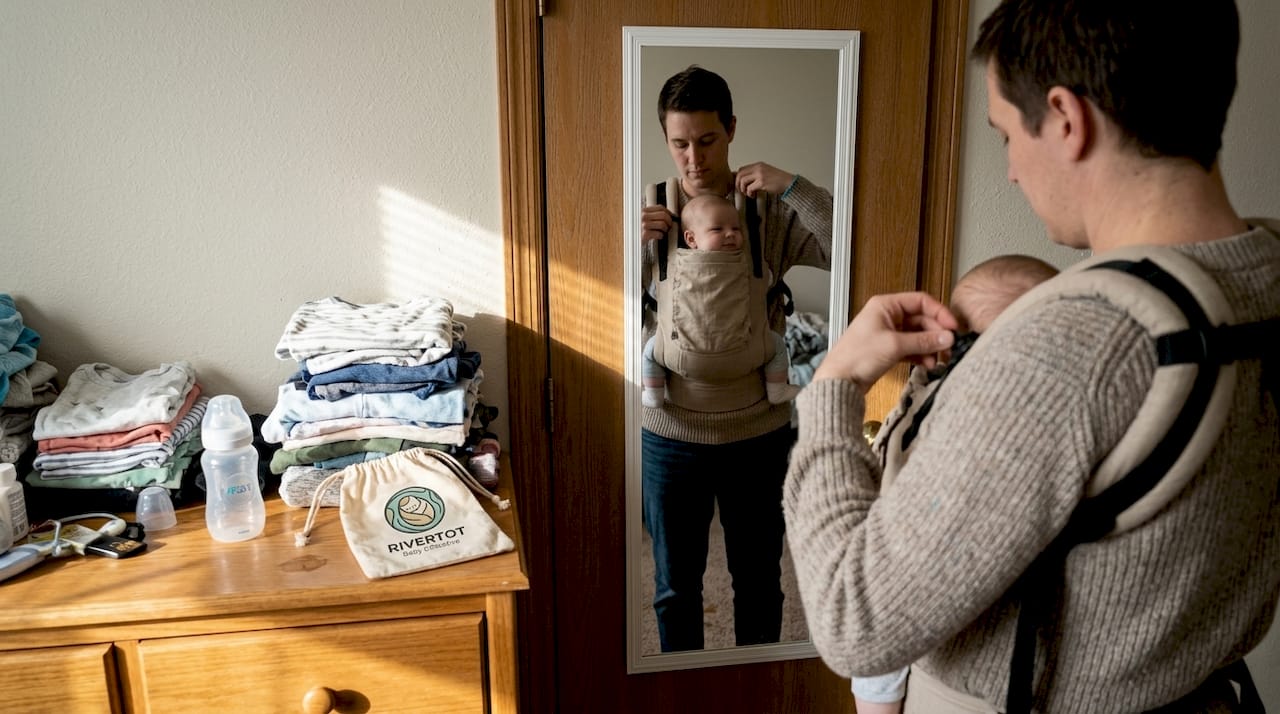
Once you've selected your carrier, mastering safety and comfort is key for both you and your baby. The most widely used safety framework is the T.I.C.K.S. rule, which ensures safe babywearing for healthy infants across all carrier types.
| T.I.C.K.S. letter | What it means |
|---|---|
| T | Tight: fabric snug with no slack |
| I | In view: baby's face always visible |
| C | Close enough to kiss: baby's head near your chin |
| K | Keep chin off chest: airway must stay open |
| S | Supported back: spine in natural curve |
Follow these steps before every use:
- Lay the carrier flat and check for frayed seams, broken buckles, or worn fabric.
- Position your baby in the M-position, where knees sit higher than the bottom and thighs are fully supported. This protects hip development.
- Tighten all straps so there is no gap between your baby's body and yours.
- Verify the baby's face is fully visible and the chin is not touching the chest.
- Do a final kiss check. If you cannot easily kiss the top of your baby's head, the baby is too low.
The M-position is especially important. Carriers that let a baby dangle by the crotch without thigh support can stress developing hip joints. Well-designed ergonomic baby slings are built to hold this position naturally. Our guide to ergonomic gear explains how proper support translates across all baby products.
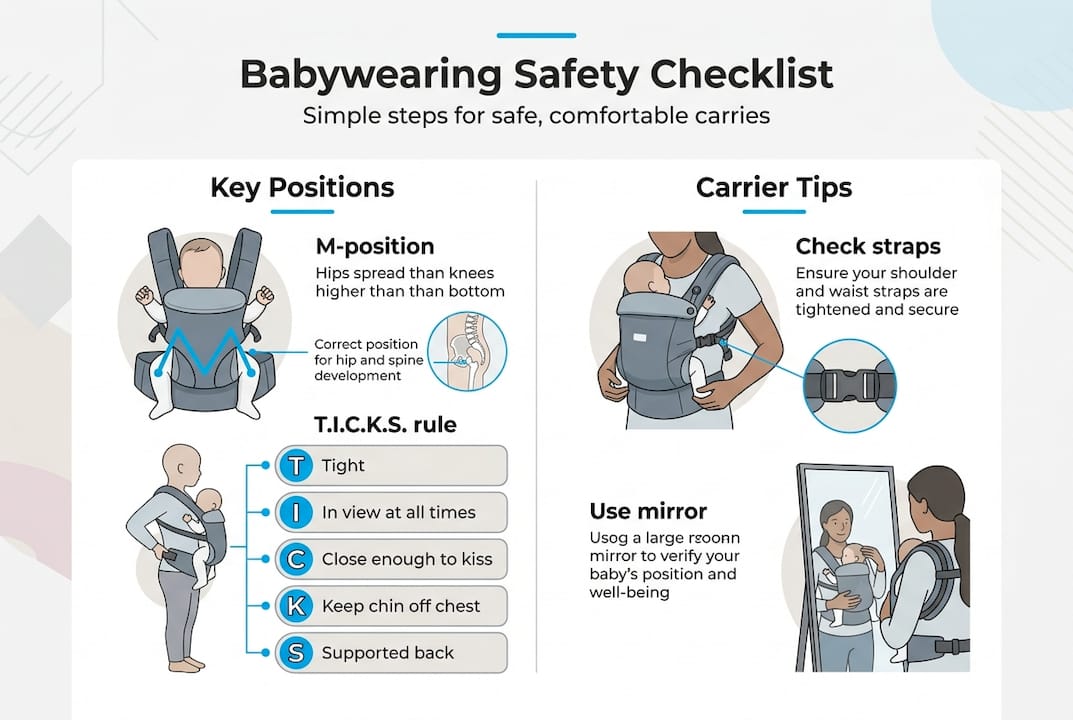
Pro Tip: Use a full-length mirror or ask a partner to check your carrier fit from behind. Small adjustments in strap tension can make a significant difference in both safety and comfort.
Parents of premature babies or infants with respiratory conditions should consult a pediatrician before babywearing. Extra caution is needed because these babies may have reduced muscle tone, making airway monitoring even more critical.
Risks, common problems, and real-world solutions
Even with guidelines, some parents face challenges. Here is what to watch for and how to manage them.
The most frequently reported issues include:
- Back and shoulder pain: Back pain affects 82% of frequent users, usually from poor carrier fit or carrying too long without a break.
- Overheating: Both caregiver and baby can overheat in warm weather, especially with thick wraps or non-breathable fabrics.
- Suffocation risk: If the baby's chin drops to the chest or the face is pressed against fabric, the airway can become blocked.
- Hip discomfort: Carriers without proper thigh support can strain the baby's developing hip joints over time.
"When T.I.C.K.S. rules are followed consistently, benefits outweigh risks and back carries significantly reduce strain on the caregiver's spine compared to front carries alone."
Practical solutions make a real difference. Take carrying breaks every 45 to 60 minutes, especially during the first weeks. Switch between front and back carry positions to distribute weight more evenly across your body. In summer, choose mesh or lightweight cotton carriers and dress your baby in one fewer layer than you would normally. Check the carrier fabric regularly for signs of wear, particularly at buckle attachment points and ring threading.
If you experience persistent back pain despite correct positioning, consider alternating babywearing with a baby bouncer seat to give your body recovery time. Exploring a range of baby carrier options can also help you find a style that better distributes weight for your body type.
Knowing when to stop is just as important as knowing how to start. If your baby seems uncomfortable, is unusually fussy, or shows any signs of breathing difficulty, remove them from the carrier immediately and consult your pediatrician.
What most babywearing guides overlook: our candid take
Most babywearing articles present it as a near-perfect parenting tool, and in many ways it is. But the cultural resurgence of babywearing has also created quiet pressure on parents to do it constantly or feel like they are missing out on a bonding opportunity. That pressure is worth addressing honestly.
The truth is that babywearing is not a one-size-fits-all solution. Some babies prefer more independent space by three or four months. Some caregivers have back conditions that make extended carrying genuinely harmful. Forcing a rigid routine because it is trending does more harm than good.
What actually works, based on real parenting experience and research showing frequent back pain is real among dedicated wearers, is flexibility. Mix carriers. Switch positions. Take breaks. Combine babywearing with other comfort tools. Use the ergonomic baby gear guide to build a broader support system rather than relying on a single method.
Responsive, adaptable babywearing beats rigid routines every time.
Find comfortable, parent-friendly baby gear for every stage
Ready to apply what you've learned and make babywearing work for your family? At River Tot, we carry a curated selection of ergonomic carriers, breathable slings, and comfort-focused gear designed to grow with your child through every stage.

Pairing the right carrier with soft baby clothes makes every carry more comfortable for sensitive newborn skin. On days when your arms and back need a rest, a supportive bouncer seat keeps your baby calm and safe while you recharge. Browse our full range of baby gear and find the tools that make your daily routine easier and your baby happier.
Frequently asked questions
Is babywearing safe for newborns?
Yes, when you follow T.I.C.K.S. safety rules and use proper positioning, babywearing is safe for most healthy newborns without medical complications.
What is the T.I.C.K.S. rule, and why is it important?
T.I.C.K.S. stands for Tight, In view, Close enough to kiss, Keep chin off chest, and Supported back. These five safety checks protect your baby's airway and posture during every carry.
Are there any health risks for caregivers using baby carriers?
Improper use or extended carrying without breaks can lead to back pain. Switching positions and checking your carrier fit regularly helps reduce discomfort, since back pain affects 82% of frequent babywearing caregivers.
How long can you carry a baby in a carrier per day?
Most healthy infants can be carried for several hours with regular breaks. Carrying 3+ hours daily is linked to reduced crying and improved bonding, provided the baby is comfortable and properly supported throughout.