

TL;DR:
- Eco-friendly diapers are made from renewable materials and avoid harmful chemicals, but are not fully biodegradable.
- Performance of eco disposables now rivals conventional brands in absorbency, leak protection, and comfort.
- Reusable cloth diapers generally have a lower environmental impact than eco disposables, but require proper washing.
Most parents assume that buying an eco-friendly diaper automatically means doing right by the planet. The reality is more complicated. No disposable diaper is 100% biodegradable or eco-perfect, with premium eco options taking 50 to 75 years to decompose compared to 500-plus years for conventional ones. That gap matters, but it also means every diaper choice involves trade-offs. This guide walks you through what eco-friendly diapers actually are, how they perform, what they do for the environment, and how to shop for them without getting misled by vague green claims.
Table of Contents
- Understanding eco-friendly diapers: What makes a diaper 'eco'?
- How eco-friendly diapers compare: Performance, comfort, and safety
- Environmental impact: Are eco-friendly diapers really 'green'?
- Practical tips: Choosing and using eco-friendly diapers
- Why the 'perfect' eco-friendly diaper doesn't exist—And what actually matters
- Explore sustainable comfort for your baby with River tot
- Frequently asked questions
Key Takeaways
| Point | Details |
|---|---|
| No perfect eco diaper | No disposable diaper is fully eco-friendly, but some are much better for the planet than conventional options. |
| Performance meets safety | Top eco-friendly diapers can match or exceed conventional ones in absorbency, comfort, and rash prevention. |
| Cloth still leads for sustainability | Reusable cloth diapers remain the most effective eco choice when used correctly, cutting waste and emissions up to 75%. |
| Transparency matters | Seek diapers with clear, verified ingredient lists and third-party certifications to avoid greenwashing. |
Understanding eco-friendly diapers: What makes a diaper 'eco'?
With parents' growing desire for sustainable options, what exactly qualifies a diaper as truly eco-friendly? The short answer: no single standard exists. The longer answer is that eco-friendly diapers are generally defined by their materials, manufacturing practices, and certifications rather than any government-regulated label.
At their core, eco-friendly diapers prioritize renewable materials and certifications but are still single-use products. They typically replace petroleum-based plastics with plant-derived alternatives and avoid harsh chemicals like chlorine bleach. Here is what you will usually find in a genuine eco-friendly diaper:
- Bamboo or cotton topsheets instead of synthetic polyester
- FSC-certified pulp (Forest Stewardship Council) sourced from responsibly managed forests
- TCF pulp (Totally Chlorine Free), which avoids the dioxins linked to conventional bleaching
- Plant-based backsheets that reduce but do not eliminate plastic content
- No fragrance, latex, or parabens in the design
- Third-party certifications such as OEKO-TEX or Bluesign for material safety
Conventional disposables, by contrast, use petroleum-based polyethylene films, chlorine-bleached pulp, and synthetic absorbent cores made from sodium polyacrylate. They are highly engineered for performance but carry a heavier chemical and environmental load.
Myth to bust: "Biodegradable" on a diaper label does not mean it will break down in your trash can or even in a landfill. Most biodegradation requires industrial composting conditions, which most families never access.
It is also worth noting that plant-based diaper materials are improving fast. Brands are innovating with cornstarch-based films and sugarcane-derived components. But even the most advanced eco disposable is not zero-waste. If you want to go further, cloth diaper options remain the most material-efficient choice for families who can manage the laundry.
Pro Tip: When evaluating any eco diaper, look for a full ingredient list published on the brand's website. If a brand will not tell you exactly what is in their product, that is a red flag.
How eco-friendly diapers compare: Performance, comfort, and safety
Understanding the core features is only the beginning. How do eco-friendly diapers perform in real life compared to conventional and cloth options?
The good news: top eco brands hold their own. Eco-diapers can match or exceed conventional brands in absorbency (500ml-plus), leak protection, and rash prevention. Brands like Kudos, HealthyBaby, Parasol, and Coterie have closed the performance gap significantly in recent years.
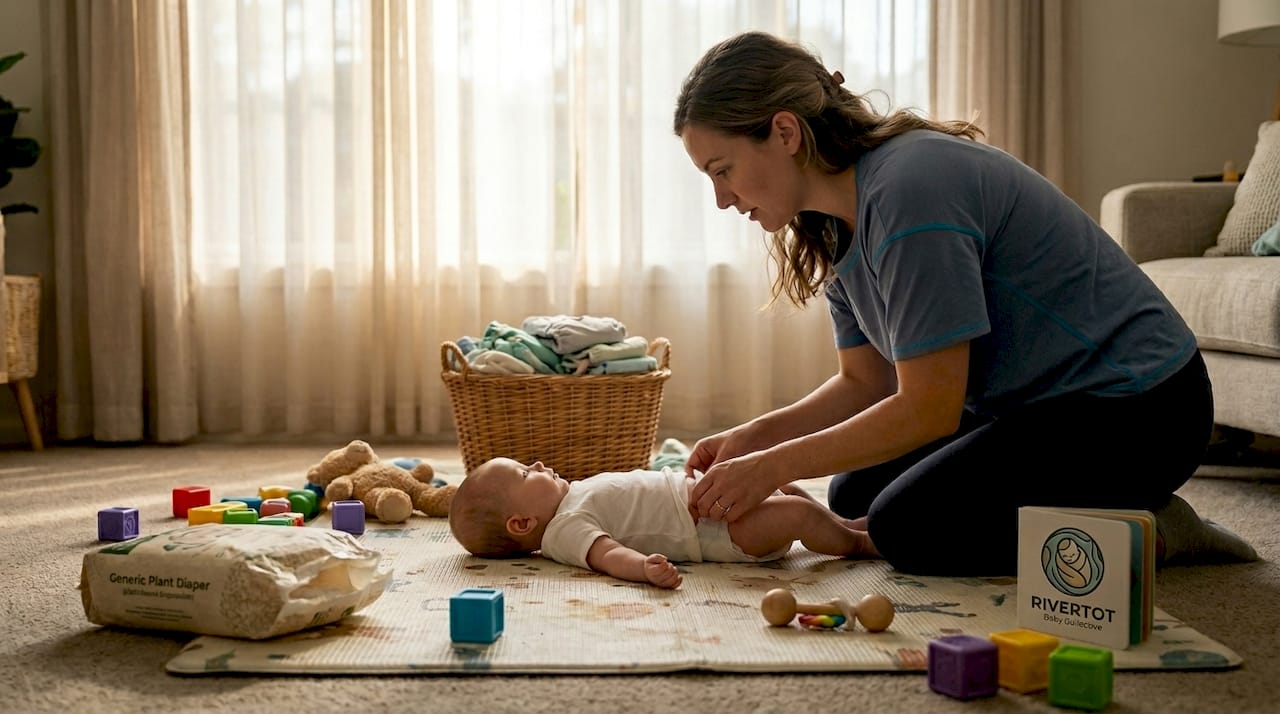
Here is a side-by-side comparison to help you see the differences clearly:
| Feature | Eco-friendly disposable | Conventional disposable | Cloth diaper |
|---|---|---|---|
| Absorbency | 500ml-plus, 12hr protection | 500ml-plus, 12hr protection | Varies by insert |
| Rash risk | Lower (no fragrance, chlorine) | Moderate | Low with frequent changes |
| Comfort | Soft, breathable materials | Functional but less breathable | Very soft, natural feel |
| Cost per diaper | $0.35 to $0.65 | $0.18 to $0.30 | High upfront, low long-term |
| Decomposition | 50 to 75 years | 450 to 550 years | Reusable |
Cotton and bamboo topsheets are a standout feature for sensitive skin. They reduce friction and moisture contact, which directly lowers the chance of diaper rash. For newborns especially, whose skin is thinner and more reactive, this matters a lot.
Here are the performance features worth prioritizing when you shop:
- Absorbent core capacity of at least 400ml for overnight use
- Breathable backsheet to reduce heat and moisture buildup
- Stretchy, adjustable tabs for a snug fit without pressure marks
- Wetness indicator for newborns to simplify change timing
- Hypoallergenic certification from a recognized third party
Pro Tip: If your newborn is showing redness or irritation, switching brands is completely fine. Cotton and bamboo-lined eco diapers are often the best starting point for sensitive skin because they skip the synthetic topsheet entirely.
For parents who use cloth diapers part-time, pairing them with an eco disposable for overnight or travel use gives you performance when you need it most without fully abandoning your sustainability goals.
Environmental impact: Are eco-friendly diapers really 'green'?
While safety and performance are key, parents increasingly want to know: do eco-friendly diapers really move the needle for the planet?
The honest answer is yes, but with limits. Lifecycle analyses show eco-disposables cut landfill waste and emissions compared to conventional diapers, but reusables are still superior for overall sustainability. Eco-friendly diapers are a meaningful step forward, not a complete solution.
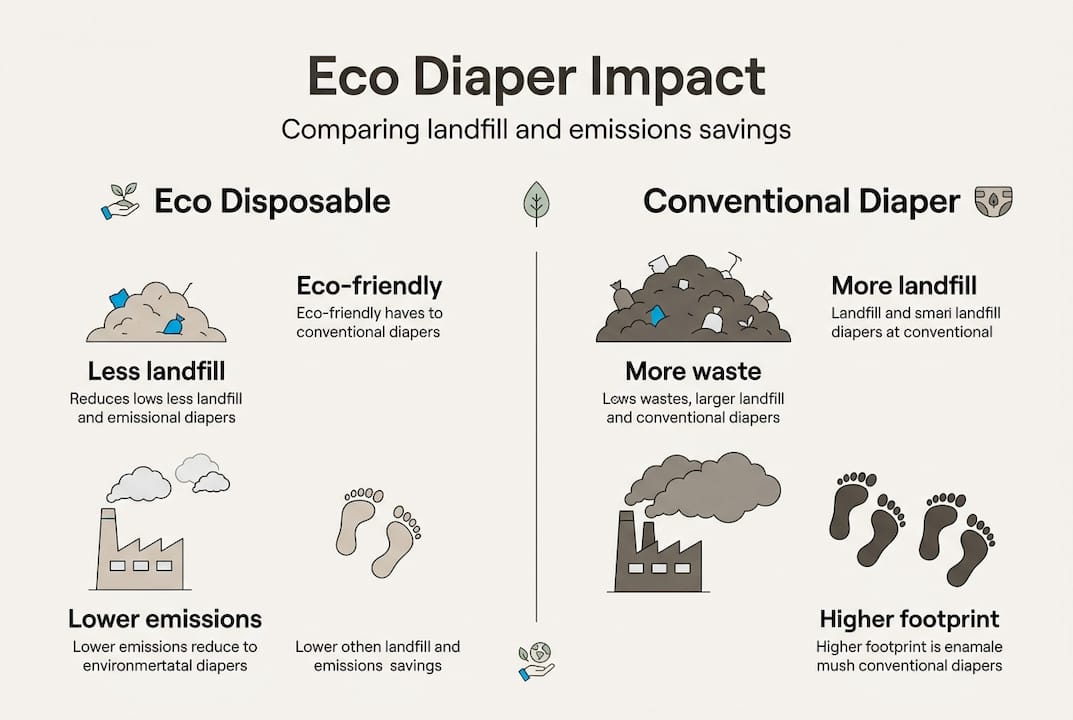
Here is how the numbers break down by diaper type:
| Diaper type | Decomposition time | CO2 per child (lifetime) | Landfill waste |
|---|---|---|---|
| Conventional disposable | 450 to 550 years | ~550kg CO2e | ~900kg solid waste |
| Eco-friendly disposable | 50 to 75 years | ~350kg CO2e | ~600kg solid waste |
| Cloth (reusable) | Reused hundreds of times | ~180kg CO2e | Minimal |
The biodegradability gap is real: premium eco diapers are 75 to 85% biodegradable versus conventional diapers that take 450 to 550 years to decompose. But biodegradation only happens under the right conditions.
Reality check: Even a diaper labeled "compostable" will not break down in a landfill. Landfills are sealed environments with limited oxygen and moisture. Industrial composting facilities are required, and very few diaper brands have programs that make this accessible.
Here is a quick summary of the environmental impact by type:
- Conventional disposables: Highest landfill volume, longest decomposition, petroleum-based materials
- Eco-friendly disposables: Reduced chemical load, shorter decomposition, still single-use
- Cloth diapers: Lowest waste overall, but water and energy use from washing must be factored in
For parents who care about reusable diaper sustainability but need the convenience of disposables sometimes, eco-friendly diapers are the most realistic middle ground. No disposable is zero-waste. Reusables offer a bigger impact for the very eco-conscious, but eco disposables are a genuinely better choice than conventional ones.
Practical tips: Choosing and using eco-friendly diapers
Knowing the key facts, how can parents put this knowledge into practice with smart everyday diapering choices?
Shopping for eco diapers can feel overwhelming with so many brands making bold claims. Here is a step-by-step approach that cuts through the noise:
- Check the ingredient list first. Brands like HealthyBaby and Kudos publish full material disclosures. If a brand does not, skip it.
- Look for recognized certifications. FSC pulp, TCF processing, and OEKO-TEX certification are the most meaningful signals of genuine eco credentials.
- Research brand reputation. Consumer Reports recommends starting with proven brands for safety and performance, and notes that subscriptions can reduce costs significantly.
- Test before committing to bulk. Order a sample pack or small size before subscribing to any brand.
- Consider your lifestyle. Cloth at home and eco disposables for outings or daycare is a hybrid approach that many families find sustainable and practical.
Greenwashing is a real problem in this category. Watch out for these red flags:
- Vague claims like "all natural" or "eco-tested" with no supporting certification
- No ingredient list available online
- "Biodegradable" claims without specifying composting conditions
- Packaging that looks green but contains no actual sustainability data
Pro Tip: Hybrid use is one of the smartest strategies available. Use cloth diapers at home where you control the laundry, and keep eco disposables for longer outings, travel, or daycare. This approach balances cost, convenience, and environmental impact better than any single diaper type alone.
A good diaper clutch bag with wipe dispenser makes eco-diapering on the go much easier. Pair it with a foldable waterproof changing pad and you have a practical, portable setup that supports your sustainable diapering routine wherever you are.
Why the 'perfect' eco-friendly diaper doesn't exist—And what actually matters
After looking at all the data, research, and parent feedback, one thing becomes clear: the search for a perfect eco-friendly diaper is a distraction from the more useful question, which is what works best for your family right now.
No disposable option is zero-impact. Every diaper, even the most plant-based one, goes into a landfill unless you have access to industrial composting. That is not a reason to give up on eco choices. It is a reason to be realistic about them. The washable diaper reality check is that reusables do win on sustainability, but they are not the right fit for every family at every stage.
What actually matters is transparency, material safety, and a choice you can stick with. A diaper that is 75% plant-based and free of chlorine, fragrance, and latex is genuinely better than a conventional one, even if it is not perfect. The "good enough" eco diaper used consistently beats the perfect one you research for months and never buy. Focus on certifications you can verify, brands that disclose their ingredients, and a routine that fits your real life.
Explore sustainable comfort for your baby with River tot
For parents ready to take the next step toward sustainable baby care, here is where to start.
At Rivertot, we believe that safe and comfortable baby essentials should also be kind to the planet. Whether you are building out your diapering routine or looking for clothing that matches your eco-minded values, our collection is designed with your baby's safety and your family's priorities in mind.
Browse our organic cotton baby bodysuit for a soft, breathable layer that pairs perfectly with any diapering setup. Our comfortable baby clothes are made for sensitive skin and real-life movement. Explore everything we offer at River tot and find the essentials that make sustainable baby care feel simple and achievable.
Frequently asked questions
Are eco-friendly diapers fully biodegradable?
No disposable diaper is 100% biodegradable. Top eco brands are 75 to 85% biodegradable, with some reaching only 50 to 65%, mainly because plastics and adhesives are still needed for structural integrity.
Which eco-friendly diaper brands are safest for sensitive skin?
Consumer Reports recommends HealthyBaby, Kudos, and Coterie for sensitive skin due to their hypoallergenic, cotton-based designs that skip chlorine processing and synthetic fragrances.
Are reusable cloth diapers more eco-friendly than eco-disposables?
Yes. With proper washing, reusables offer a 56 to 75% lower carbon footprint than disposables and generate far less landfill waste over a child's diapering years.
How can parents avoid greenwashing when shopping for eco-friendly diapers?
Look for full ingredient lists and verifiable certifications like FSC or TCF. CR-recommended brands such as HealthyBaby and Kudos are a reliable starting point because their safety claims are independently tested.