

Washing baby clothes the wrong way can leave behind detergent residue, manufacturing chemicals, or allergens that irritate your newborn's skin before you even realize something is wrong. New baby clothes should always be washed before first use to remove residues that could harm sensitive skin. This guide walks you through everything you need: the right detergents, washing steps, stain removal tricks, and safety tips that protect both your baby and the clothes themselves. Whether you're dealing with a blowout at 2 a.m. or trying to keep a favorite onesie soft after 50 washes, you'll find practical answers here.
Table of Contents
- What you need before washing baby clothes
- Step-by-step washing guide for baby clothes
- Treating stains and troubleshooting common issues
- Safety, skin comfort, and expert tips for long-lasting baby clothes
- What most guides miss: Why comfort, not just cleanliness, matters for baby clothes
- Explore baby-safe clothing and essentials for easier care
- Frequently asked questions
Key Takeaways
| Point | Details |
|---|---|
| Always pre-wash new clothes | Washing clothes before first use removes chemicals and residues that may irritate your baby’s skin. |
| Pick gentle detergents | Fragrance-free, hypoallergenic options keep baby clothes soft and safe for sensitive skin. |
| Treat stains ASAP | Quick action with cold water and enzyme cleaners prevents stains from setting and keeps clothes fresh. |
| Handle flame-resistant sleepwear carefully | Avoid bleach and use low heat to preserve pajamas’ fire safety properties. |
| Comfort is as vital as cleanliness | Soft, breathable fabrics and gentle laundry habits help your baby feel good every day. |
What you need before washing baby clothes
Getting the right supplies together before wash day saves you from making last-minute decisions that could damage delicate fabrics or irritate your baby's skin. Think of this as your laundry prep checklist.
Detergent selection matters most. Baby skin is thinner and more permeable than adult skin, which means it absorbs irritants more easily. Always choose a detergent that is fragrance-free, hypoallergenic, and dye-free. Plant-based formulas are a strong choice, especially if your baby has shown any sensitivity. Hypoallergenic baby clothing pairs best with detergents that match the same low-irritant standard.
Here's a quick comparison to help you choose:
| Detergent type | Best for | Avoid if |
|---|---|---|
| Fragrance-free, plant-based | All babies, sensitive skin | N/A |
| Standard baby detergent | Healthy skin, no allergies | Eczema, rash-prone skin |
| Regular adult detergent | Not recommended for infants | Always avoid on newborns |
Essential supplies to have ready:
- Fragrance-free, dye-free, hypoallergenic detergent
- Mesh laundry bags (keeps tiny socks and mittens from disappearing)
- A clean laundry bin dedicated to baby items
- Stain pre-treater that is enzyme-based and baby-safe
- A drying rack for air-drying delicate pieces
For water temperature, use cold or warm water with a gentle or delicate cycle to protect both baby skin and fabric integrity. Hot water is only appropriate for heavily soiled items like cloth diapers, and even then, check the care label first. You can also find helpful laundry tips from KidsHealth to round out your routine.
Pro Tip: Run a second rinse cycle on every load of baby laundry. This removes any detergent residue that a single rinse might leave behind, which is one of the most common causes of skin irritation in infants.
Step-by-step washing guide for baby clothes
With the right materials ready, you're set to start washing. Here's how to do it step-by-step to keep baby clothes cozy and safe.
Step 1: Sort before you wash. Separate baby clothes by fabric type, color, and whether any items are flame-resistant. Flame-resistant sleepwear needs its own pile because bleach and fabric softeners destroy the fire-safety treatment woven into those fibers.
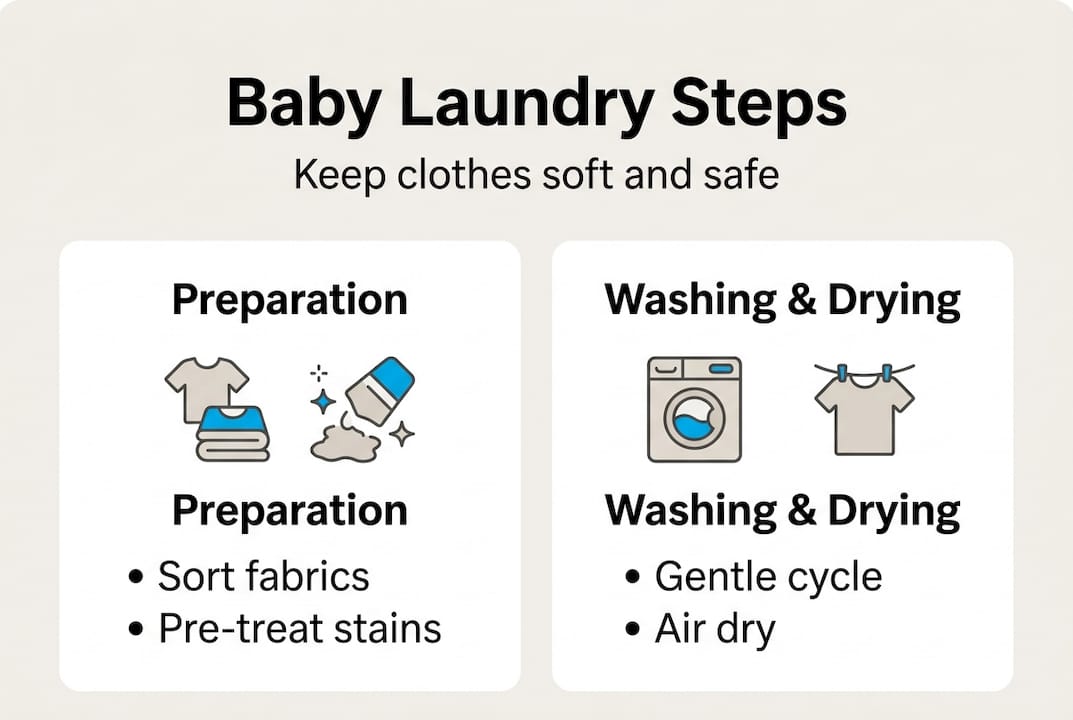
Step 2: Pre-treat any visible stains. Address stains before they go into the machine. Letting a stain sit through a full wash cycle without pre-treatment makes it much harder to remove later.
Step 3: Load the machine correctly. Place small items like socks, bibs, and mittens inside a mesh laundry bag. This protects them from tangling and keeps them from getting lost.
Step 4: Select the right settings. Use a gentle or delicate cycle. For most baby clothes, cold or warm water is ideal. Organic cotton and bamboo require cold water and air drying because natural fibers shrink quickly when exposed to heat.
Step 5: Dry with care. Tumble dry on low heat for most items. For organic or natural fiber pieces, air drying on a rack is the safest option. Check out this organic cotton care guide for more detail on handling natural fabrics.
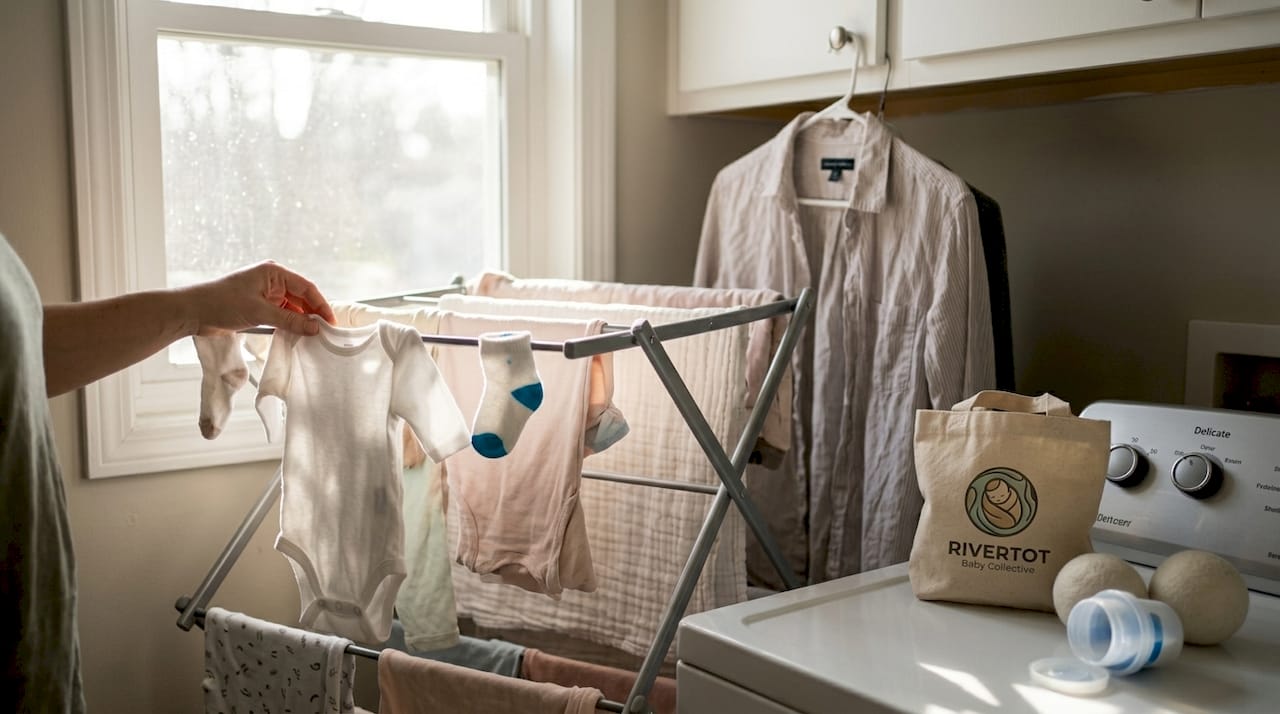
Here's a quick reference for washing settings:
| Fabric type | Water temp | Dry method |
|---|---|---|
| Organic cotton | Cold | Air dry |
| Bamboo | Cold | Air dry |
| Polyester blend | Warm | Low tumble |
| Flame-resistant PJs | Warm | Low tumble, no softener |
Never use bleach on flame-resistant sleepwear. Bleach breaks down the chemical treatment that makes those pajamas fire-safe, removing a critical layer of protection.
For most families, washing baby clothes with the rest of the family's laundry using fragrance-free detergent is perfectly fine, unless your baby has eczema or allergies. Keeping a separate load is only necessary when there's a specific skin condition involved. If you want more guidance on fabric care, this resource on organic cotton care is worth bookmarking. You can also explore machine washable baby products that simplify your laundry routine from the start.
Pro Tip: Turn dark-colored baby clothes inside out before washing. This slows color fading significantly and keeps printed designs looking sharp longer.
Treating stains and troubleshooting common issues
Even with careful washing, stains and laundry mishaps happen. This section shows you how to fix them quickly and keep clothes looking new.
Baby stains fall into a few predictable categories: breast milk, formula, poop, spit-up, and food purees. Most of these are protein-based, which means they respond well to the same basic treatment.
How to treat the most common stains:
- Breast milk or formula: Rinse immediately with cold water, then apply an enzyme-based stain remover. Let it sit for 10 to 15 minutes before washing.
- Poop blowouts: Scrape off solids first, then flush with cold water from the back of the fabric to push the stain out rather than deeper in. Apply enzyme cleaner and wash on a warm cycle.
- Spit-up: Blot (don't rub), rinse with cold water, and pre-treat with enzyme remover before the next wash.
- Food purees: Scrape off excess, rinse with cold water, and treat with a gentle enzyme-based cleaner.
Pre-treat protein stains immediately with cold water and enzyme-based removers. Hot water sets protein stains permanently, so always start cold.
For choosing safe baby clothing that resists staining and holds up through repeated washing, fabric choice matters as much as care technique.
Common laundry mistakes and how to fix them:
- Shrunken clothes: Soak in lukewarm water with a small amount of hair conditioner for 30 minutes, then gently stretch back to shape while damp.
- Faded colors: Prevent by washing in cold water and turning clothes inside out. Once faded, there's no reversal, so prevention is key.
- Detergent residue on skin: Run an extra rinse cycle and switch to a plant-based, fragrance-free formula.
Pro Tip: Keep a small spray bottle of diluted enzyme cleaner near the changing table. Treating stains within the first few minutes makes removal dramatically easier than waiting until laundry day.
Safety, skin comfort, and expert tips for long-lasting baby clothes
Once you've tackled stains and mishaps, final care steps help ensure your baby stays safe and comfortable for every wear.
For babies with eczema or sensitive skin, the standard wash routine needs a few upgrades. Extra rinsing, plant-based detergents, and organic fabrics all work together to minimize irritation risks. Even one extra rinse cycle per load can make a noticeable difference for reactive skin.
Fabric and care choices that protect sensitive skin:
- Choose organic cotton or bamboo over synthetic blends when possible
- Avoid dryer sheets and fabric softeners, which leave a coating on fibers that can irritate skin
- Skip any product with added fragrance, even if it's labeled "baby fresh"
- Store clean baby clothes in a closed drawer or container to prevent dust exposure
- Wash new clothes at least once before first wear, no matter how clean they look
On the topic of fabric softeners, no evidence suggests that biological detergents or conditioners inherently irritate skin, but they should still be avoided on cloth diapers because they reduce absorbency.
Never use bleach on flame-resistant pajamas. It doesn't just damage the fabric. It removes the fire-safety treatment entirely, which creates a real safety risk.
For more on this topic, the article on flame retardant free baby gear explains why the materials in your baby's sleepwear matter beyond just washing. And if you're building out a full care routine, safe nursery essentials covers the broader picture.
Pro Tip: Air-drying baby clothes extends fabric life significantly. Heat from dryers breaks down elastic, fades colors, and weakens fibers over time. Even air-drying just the delicate pieces adds months to their lifespan.
What most guides miss: Why comfort, not just cleanliness, matters for baby clothes
Most laundry guides focus entirely on hygiene and fabric longevity. Those things matter, but they miss something important: how clothes feel against your baby's skin affects their mood, sleep quality, and even how they bond with you during dressing time.
Babies process the world almost entirely through touch in their first months. Scratchy seams, stiff fabric from detergent buildup, or clothes that trap heat can make an already fussy baby harder to settle. Organic and natural fibers are softer and more hypoallergenic, and comfort affects a baby's sleep and mood just as much as safety does.
We think about washing as a chore, but it's actually a care decision. When you choose the right detergent, skip the fabric softener, and air-dry a favorite sleeper, you're making that garment gentler against your baby's skin for the next wear. That matters. The benefits of organic cotton go beyond marketing: softer fibers mean less friction, less irritation, and a calmer baby.
Prioritize feel and breathability alongside your washing schedule. Clean clothes that feel rough or stiff aren't doing the full job.
Explore baby-safe clothing and essentials for easier care
If you're putting this much thought into how you wash baby clothes, it makes sense to start with clothing that's designed to hold up through careful laundering and stay gentle on sensitive skin.

At Rivertot, you'll find bright comfortable baby clothes made with softness and safety in mind, so your laundry routine works with the fabric instead of against it. For newborns especially, our newborn baby onesies are designed for easy care and gentle wear. Browse the full collection to find pieces that make dressing, washing, and caring for your baby a little easier every day.
Frequently asked questions
Should I wash new baby clothes before first use?
Yes, always wash new baby clothes before your baby wears them to remove chemicals and manufacturing residues that could irritate sensitive skin.
What detergent is best for baby clothing?
Choose fragrance-free, hypoallergenic detergents that are also dye-free. Plant-based formulas are ideal, especially for babies with sensitive skin or known allergies.
How do I remove tough stains from baby clothing?
Flush protein-based stains with cold water right away, apply an enzyme-based remover, and avoid hot water entirely since heat sets stains permanently.
Is it safe to wash baby clothes with the rest of the family's laundry?
Yes, washing together is safe as long as you use fragrance-free detergent and your baby doesn't have eczema or specific allergies that require extra precaution.
What's the best way to preserve flame resistance in baby sleepwear?
Avoid bleach and fabric softeners entirely, and dry on low heat to maintain the fire-safety properties built into flame-resistant pajamas.
Recommended
- How to choose baby clothing for comfort and safety – River tot
- Baby clothing checklist 2026: essentials for comfort – River tot
- How to dress your newborn for comfort and safety
- Baby Cloth Diapers Soft And Comfortable Baby Diapers - River tot - 0 - SPOD - CYOkeywords
- Crib Bedding Materials Explained: Safe, Soft Choices