
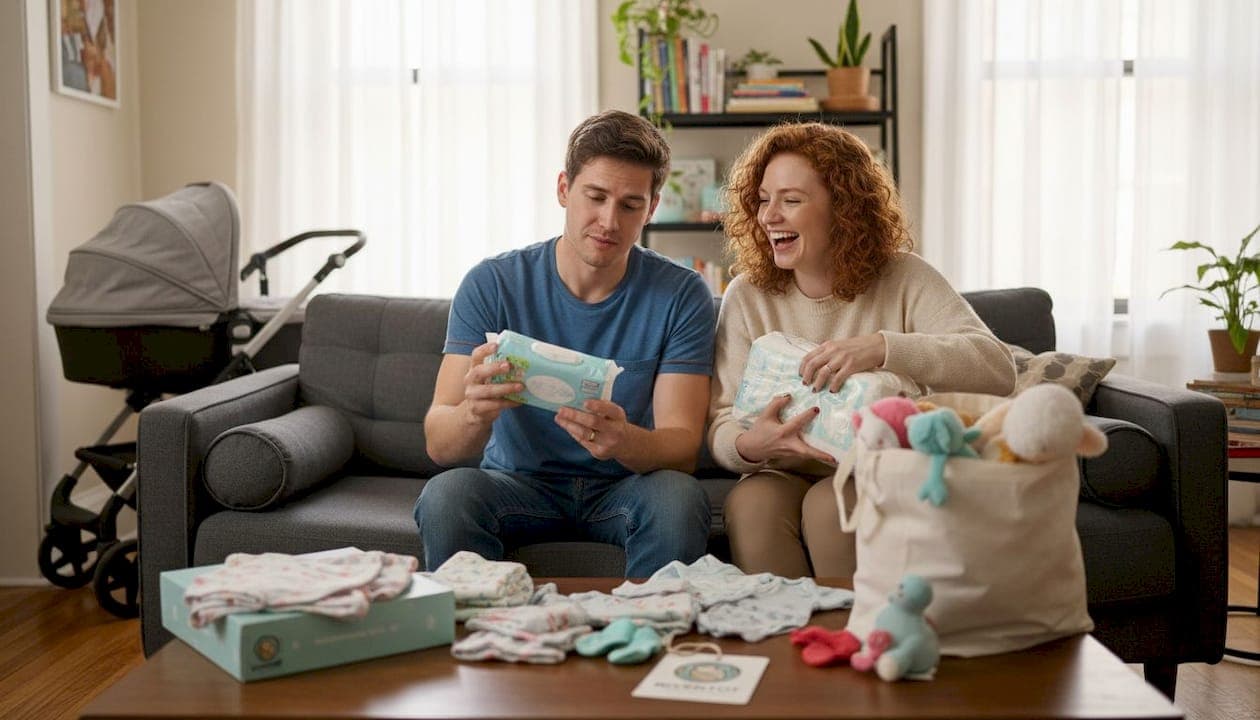
Every new parent has a closet full of tiny outfits their baby outgrew before wearing once. Meanwhile, they ran out of diapers on a Tuesday night and had no burp cloths clean. The gap between what people give and what families actually need is real, and it costs new parents time, money, and sleep. This guide walks you through a smarter approach to newborn gift-giving, one grounded in safety, usability, and what pediatricians and experienced parents say actually matters.
Table of Contents
- The problem with traditional newborn gifts
- Step 1: Ask the parents and check for real needs
- Step 2: Prioritize safety above all else
- Step 3: Practical essentials every new parent uses daily
- Step 4: Don't forget health, comfort, and support for parents
- How to verify and wrap up your gift choice
- Rivertot: Find practical newborn gifts parents appreciate
- Frequently asked questions
Key Takeaways
| Point | Details |
|---|---|
| Always prioritize safety | Choose gifts with recognized certifications and avoid items associated with SIDS risk. |
| Ask about real needs | Communicate with parents and check registries to give truly useful gifts. |
| Focus on everyday essentials | Diapers, wipes, and feeding items help new parents more than trendy gadgets. |
| Support parents too | Meal deliveries and self-care gifts can be just as vital as baby gear. |
| Double-check quality | Verify every product's safety and reviews before gifting for peace of mind. |
The problem with traditional newborn gifts
Most people default to what looks adorable on a shelf. Tiny shoes, novelty onesies, and elaborate nursery decor are crowd favorites. But here is the honest truth: many of these gifts sit unused while parents scramble for the basics.
Common gifts that miss the mark include:
- Newborn-size clothing (babies often skip this size entirely)
- Crib bumpers (flagged as a suffocation hazard by pediatricians)
- Wipe warmers and novelty gadgets that add clutter without solving problems
- Soft blankets placed in the sleep space, which violate safe sleep guidelines
- Duplicate items parents already received from someone else
As one pediatric resource puts it, trendy baby gadgets like wipe warmers and excessive clothing are frequently pushed in gift guides, but doctors consistently recommend prioritizing real-world usability and essentials instead.
"The best gifts are the ones parents reach for every single day, not the ones that look impressive at a shower."
Parents are often too polite to say they received five swaddle blankets and zero diaper rash cream. Understanding what NOT to give is just as valuable as knowing what to buy. Start with the essentials newborn checklist to ground your thinking before you shop.
Step 1: Ask the parents and check for real needs
The single most effective thing you can do before buying a newborn gift is ask. It feels less spontaneous, but it is far more useful. A quick message to the parents saves everyone time and ensures your gift actually gets used.
Here is a simple process to follow:
- Check their registry first. Most parents build one specifically to guide gift-givers toward what they need.
- Ask about feeding preferences. Breastfeeding families need different supplies than formula-feeding ones.
- Find out their diapering approach. Cloth diaper families will not use a box of disposables, and vice versa.
- Ask about skin sensitivities. Some babies need hypoallergenic options for sensitive skin from day one.
- Confirm the baby's situation. Twins, preemies, or babies with health conditions have very specific needs.
The best approach is to ask parents about their true priorities, feeding methods, and registry, and confirm safety standards to avoid duplicates and unnecessary items.
Pro Tip: If you cannot reach the parents, choose consumables like diapers in size 1 or 2, unscented wipes, or a gift card to a baby retailer. These are almost never wasted.
Step 2: Prioritize safety above all else
Once you know what the family needs, run every product through a safety filter before purchasing. This is non-negotiable for newborn gifts.
| Product type | Safe option | Avoid |
|---|---|---|
| Sleep surface | Firm crib with fitted sheet | Soft bedding, bumpers |
| Swaddle | Fitted sleep sack | Weighted swaddles, loose blankets |
| Pacifier | AAP-approved, one-piece design | Clip-on cords near face |
| Sound machine | Simple white noise device | Devices placed inside crib |
Products should meet CPSC and AAP standards, including firm cribs, fitted sheets only, and no bumpers, weighted swaddles, or inclined sleepers, all of which increase SIDS risk. Consumer Reports also tests for real-world safety and emphasizes back-sleeping on firm, stable surfaces.
Safe sleep gifts that always make sense:
- Sleep sacks in appropriate tog ratings for the season
- Fitted crib sheets in 100% cotton
- Pacifiers that meet one-piece safety standards
- White noise machines placed at a safe distance from the crib
"Firm sleep surface, no soft objects, back to sleep every time. These are the three rules that save lives."
For more guidance, review essential newborn safety tips before finalizing any sleep-related purchase. If you are considering a sleep aid, look at choosing safe sleep aids that meet current safety standards.
Step 3: Practical essentials every new parent uses daily
Safety is the filter. Practicality is the goal. The gifts that get used every single day are almost always consumables or simple, well-designed tools.
Consumables parents burn through fast:
- Diapers in sizes newborn, 1, and 2 (newborns need 10 to 11 diapers per day, so quantity matters)
- Unscented, hypoallergenic wipes
- Diaper rash cream
- Burp cloths (you can never have too many)
- Nursing pads or formula samples, depending on feeding method
Non-consumables with long-term value:
| Item | Why it matters | Lifespan |
|---|---|---|
| Baby carrier | Hands-free comfort for parent and baby | 0 to 18 months |
| Grooming kit | Nail trims, temperature checks, nasal care | Years |
| Portable changing pad | Diaper changes anywhere | 0 to 24 months |
| Diaper clutch bag | Organized, grab-and-go diapering | Years |
Practical consumables like diapers, wipes, and subscriptions save time, while non-consumables like carriers, first-aid kits, and grooming sets offer long-term value. A diaper clutch bag keeps everything organized on the go, and a portable changing pad makes diaper changes manageable anywhere. If the family uses cloth diapers, cloth diaper options are a thoughtful and eco-friendly alternative.

Pro Tip: Choose clothing in sizes 0-3 months or 3-6 months rather than newborn. Babies grow so fast that newborn size is often skipped entirely, and a slightly larger outfit will get far more use.
Step 4: Don't forget health, comfort, and support for parents
Beyond daily basics, some of the most impactful gifts address health needs that parents often forget to prepare for, and the very real exhaustion that comes with a newborn.
Newborn health essentials often overlooked:
- Rectal thermometer (the most accurate for infants)
- Nasal aspirator for congestion relief
- Saline drops to clear tiny nasal passages
- Vitamin D drops (recommended for breastfed babies)
- Bulb syringe for quick nasal or mouth clearing
These health essentials are critical for newborn care and are frequently missing from registries because parents do not think of them until they need them urgently at 2 a.m.
Now consider the parents themselves. Sleep deprivation in the first weeks is severe. Gifts for overwhelmed parents, like meal delivery or a cleaning service, can make more impact than any baby outfit. A week of dinners delivered to the door is something most new parents will remember for years.

For edge cases like premature babies or infants with sensitive skin, check the health essentials checklist for specialized product recommendations that fit their specific situation.
Stat to know: New parents lose an average of 109 minutes of sleep per night in the first year. Gifts that reduce their mental load, like meal kits or housekeeping vouchers, directly address this reality.
How to verify and wrap up your gift choice
You have chosen something practical and safe. Now do a final check before you wrap it up.
- Search the CPSC recall database for the product name and model number.
- Read recent reviews from the past six months, not just the star rating.
- Confirm certifications are current, not just listed on old packaging.
- Check the return policy so parents can exchange sizes or styles if needed.
- Write a short note explaining why you chose this gift. It shows thought and helps parents understand the value.
Parents and professionals recommend checking for recent recalls, up-to-date reviews, and avoiding items with known safety concerns before gifting anything to a newborn.
For presentation, skip the elaborate wrapping and bundle essentials in a reusable basket or tote bag. A diaper bag filled with wipes, cream, burp cloths, and a grooming kit is both practical and visually appealing. Use the essential newborn safety checklist as your final reference to make sure nothing important is missing.
Pro Tip: Attach a card that says "I checked the recall list and the safety ratings on this" and watch the parents' faces light up. That one sentence communicates more care than any bow.
Rivertot: Find practical newborn gifts parents appreciate
Everything covered in this guide, from safe sleep products to daily-use consumables and parent support items, is exactly what Rivertot curates for families. You do not have to guess or spend hours researching.

Rivertot's collection includes comfortable baby clothes in soft, skin-friendly fabrics, a baby bouncer designed for newborns from 0 to 9 months, and an 18-piece baby grooming kit that covers every health essential in one box. Every product is handpicked to align with the safety and usability standards outlined in this guide. Fast and free shipping means your gift arrives when it is needed most, not weeks later.
Frequently asked questions
What are the safest gift options for newborns?
Safe gifts include items meeting CPSC and AAP standards, such as firm cribs, fitted sheets, sleep sacks, and pacifiers. Never give bumpers, loose blankets, or weighted swaddles.
How many diapers should I give as a practical newborn gift?
Plan for at least 300 diapers spread across newborn, size 1, and size 2, since newborns need 10 to 11 diapers per day. Include sensitive-skin or eco-friendly options when possible.
What gifts support new parents themselves?
Meal delivery services, housekeeping help, and self-care items offer real relief. Supportive gifts for parents like meal deliveries or cleaning services can be more helpful than any baby item.
Are clothing gifts practical for newborns?
Yes, if you choose the right size. Opt for 0-3 or 3-6 month sizes in soft, hypoallergenic fabrics, and avoid overbuying newborn size since most babies outgrow it within weeks.
How can I check if a newborn gift is safe and high quality?
Always verify certifications, check for recent recalls on the CPSC database, and read updated parent reviews before purchasing any newborn gift.