

TL;DR:
- Baby skin is thin, permeable, and loses moisture faster, requiring extra gentle care.
- Synthetic ingredients like parabens and fragrances pose risks due to high absorption and irritation.
- A minimalist routine with safe, evidence-backed natural products supports healthy, protected baby skin.
Most parents carefully read food labels but never think twice about what goes into their baby's lotion. Baby skin is thinner, more permeable, and loses moisture faster than adult skin, meaning every product you apply absorbs quickly and deeply. That gap between assumption and reality is where real risks hide. This guide walks you through why natural skincare options are not just a trend but a genuinely safer approach, what ingredients to watch for, and how to build a simple routine that actually protects your little one's skin from day one.
Table of Contents
- Why baby skin needs extra protection
- Risks of synthetic ingredients in baby skincare
- How natural ingredients nourish and protect
- Building a safe, minimalist baby skincare routine
- The overlooked truth: Natural baby skincare isn't just marketing (what parents miss))
- Safer routines start with trusted essentials
- Frequently asked questions
Key Takeaways
| Point | Details |
|---|---|
| Baby skin is delicate | Babies' skin is thinner and more absorbent, making gentle choices crucial. |
| Synthetic risks are high | Chemicals like parabens are much more readily absorbed by infants and can be harmful. |
| Naturals offer proven benefits | Plant oils like shea, coconut, and sunflower safely hydrate and protect baby skin. |
| Minimal routines work best | Simple, fragrance-free skincare routines are safest for maintaining healthy baby skin. |
| Evidence trumps marketing | Prioritize evidence-backed, fragrance-free, and hypoallergenic products over marketing claims. |
Why baby skin needs extra protection
Baby skin looks soft and healthy, but underneath that smooth surface is a barrier that is still developing. The outermost layer, called the stratum corneum, is thinner and less organized than in adults. This means it cannot block irritants, allergens, or chemicals as effectively. Water evaporates from it faster too, which is why babies dry out so quickly after a bath.
"Baby skin is more permeable and loses moisture faster, making it prone to irritation from chemicals in everyday skincare products."
Because the skin barrier is immature, whatever you apply to your baby's skin gets absorbed at a much higher rate than it would on yours. Think about the surface area too. Babies have a higher skin-to-body-weight ratio than adults, so the relative exposure to any applied product is significantly greater. A small amount of lotion covers a proportionally larger area of their total body.
Here is what makes baby skin uniquely vulnerable:
- Thinner epidermis: Less physical protection against external irritants and pathogens.
- Higher absorption rate: Chemicals penetrate more easily and reach the bloodstream faster.
- Faster moisture loss: The skin dries out quickly, which can trigger redness and flaking.
- Immature immune response: Babies cannot fight off sensitization reactions as effectively as older children.
- pH differences: Newborn skin starts slightly alkaline and takes weeks to reach the protective acidic level adults have.
Now that we recognize the critical differences in baby skin, let's see why that matters when selecting skincare products. Choosing gentle bath options and learning about safe bath accessories are practical first steps every parent can take to reduce unnecessary chemical exposure during daily care.
Risks of synthetic ingredients in baby skincare
Walk down any drugstore baby aisle and you will find shelves packed with products that list parabens, synthetic fragrances, PEGs, and formaldehyde-releasing preservatives. These ingredients are common because they are cheap and effective at extending shelf life. The problem is that they were not designed with a baby's permeable, developing skin in mind.
The numbers are striking. Lotion use led to 355% higher methylparaben levels in infants compared to those who did not use paraben-containing products. That is not a small difference. Parabens are endocrine disruptors, meaning they can interfere with hormone signaling. In a developing infant, that kind of interference carries real long-term implications.
Synthetic fragrances are another major concern. A single "fragrance" listing on a label can represent dozens of undisclosed chemicals. Many of these are known allergens. Because babies cannot tell you when something itches or burns, sensitization can build quietly before you notice a visible reaction.
| Ingredient | Common use | Potential risk for infants |
|---|---|---|
| Parabens | Preservative | Endocrine disruption, high absorption |
| Synthetic fragrance | Scent | Allergen sensitization, skin irritation |
| PEGs | Texture/emulsifier | Skin penetration enhancer |
| Formaldehyde releasers | Preservative | Carcinogen risk, contact dermatitis |
| Mineral oil | Moisturizer | Occlusive, may block pores |
Pro Tip: Flip the bottle over and scan the last five ingredients. Preservatives and fragrance compounds are usually listed near the bottom. If you see "parfum," "fragrance," or any paraben (methylparaben, propylparaben), put it back.
Cumulative exposure matters here. Babies often get lotion, shampoo, wipes, and diaper cream applied multiple times a day. Each product adds to the total chemical load. Reviewing safe nursery essentials is a smart way to audit every product in your baby's environment, not just skincare.
How natural ingredients nourish and protect
Natural plant oils and butters work differently from synthetic moisturizers. Instead of just sitting on top of the skin, many of them actually mimic the skin's own lipid structure. This helps them integrate into the barrier and support repair from within.
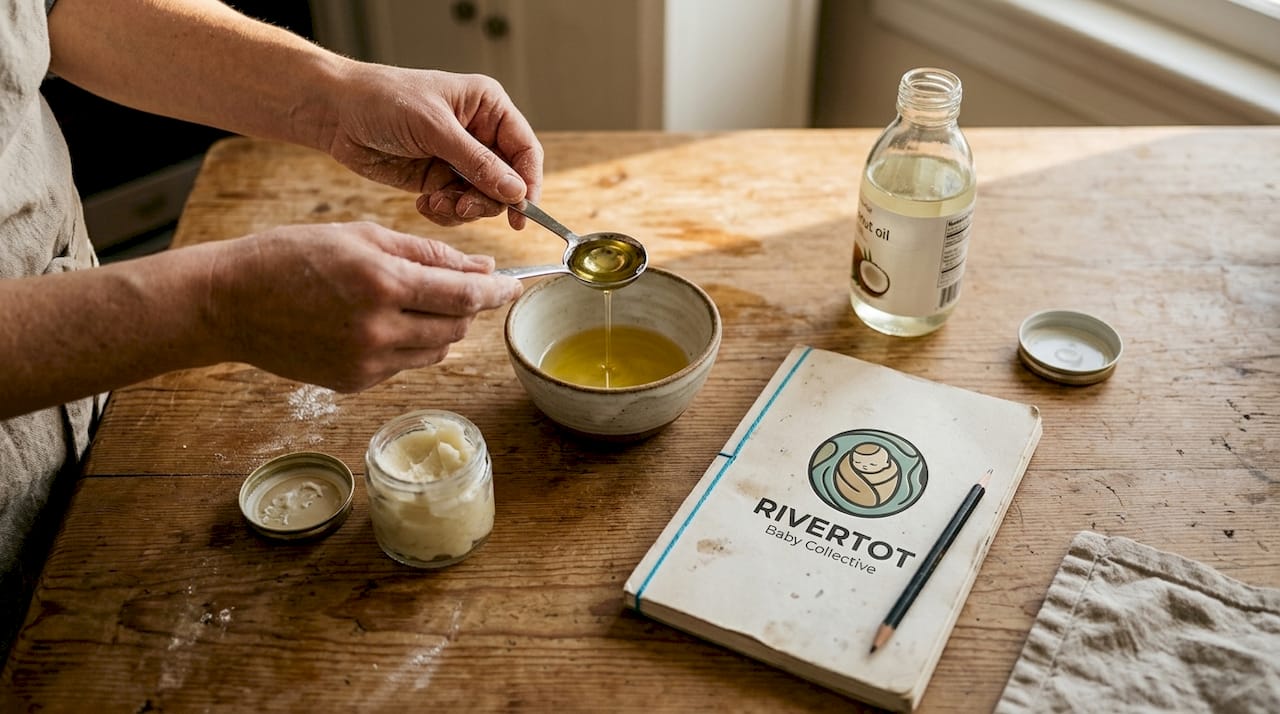
Shea butter, coconut oil, sunflower, and similar oils offer hydration, skin barrier support, and in some cases antibacterial protection. Sunflower seed oil is particularly well studied for infant skin. It is rich in linoleic acid, which is a fatty acid that helps maintain the skin barrier without triggering sensitization in most babies.
Here is a quick comparison to help you choose:
| Natural ingredient | Key benefit | Best for |
|---|---|---|
| Shea butter | Deep moisture, anti-inflammatory | Dry patches, winter skin |
| Sunflower seed oil | Barrier repair, lightweight | Everyday use, newborns |
| Coconut oil | Antibacterial, softening | Diaper area, cradle cap |
| Calendula extract | Soothing, anti-inflammatory | Rashes, irritated skin |
| Argan oil | Antioxidant, hydrating | Dry or mature infant skin |
Natural does not automatically mean risk-free, though. Some botanicals, like lavender essential oil or tea tree oil, can irritate sensitive or eczema-prone skin. Always check that products use these in safe concentrations, and avoid applying undiluted essential oils directly to baby skin.
The best natural options to look for:
- Fragrance-free plant oils with a short, readable ingredient list.
- Unrefined shea butter for intense moisture without additives.
- Calendula-based creams for soothing redness and diaper rash.
- Certified organic formulations that reduce pesticide residue risk.
You can explore organic baby oils formulated specifically for delicate skin, and if you want to understand why certain oils stand out, the argan oil benefits guide offers a useful breakdown. Once you know which natural ingredients are safest and most effective, the next step is learning how to build a baby-friendly skincare routine.
Building a safe, minimalist baby skincare routine
Simplicity is the goal. The more products you use, the more chances there are for a reaction. A minimalist routine reduces that risk while still giving your baby's skin everything it needs.
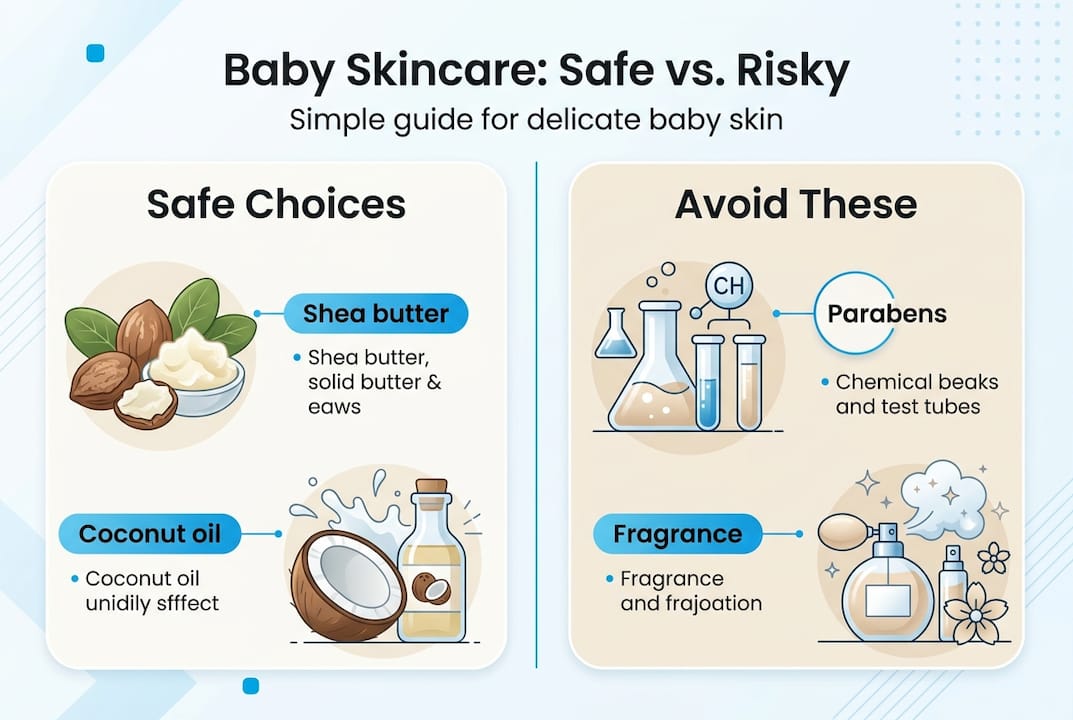
The AAP recommends fragrance-free, hypoallergenic, pH-neutral cleansers, thick moisturizers, and avoiding harsh soaps and fragrances for newborns and infants. That guidance is simple but powerful. Thick creams and ointments outperform thin lotions because they create a better physical seal on the skin.
Here is a practical daily routine you can follow:
- Cleanse gently: Use a fragrance-free, pH-balanced baby wash two to three times per week for newborns. Daily bathing is not necessary and can strip natural oils.
- Pat dry: Never rub. Pat skin dry with a soft towel, leaving a little moisture on the surface.
- Moisturize immediately: Apply a thick, fragrance-free cream or ointment within three minutes of bathing while skin is still slightly damp.
- Protect the diaper area: Use a barrier cream with zinc oxide or a natural alternative like shea butter at every diaper change.
- Use safe wipes: pH-buffered baby wipes outperform water for reducing irritation and supporting the skin barrier during diaper changes.
Pro Tip: Before introducing any new product, do a patch test. Apply a small amount to the inner arm and wait 24 hours. No redness or reaction means it is likely safe to use more broadly.
For babies with eczema or preterm infants, natural products alone may not be enough. These babies often need prescription-strength emollients or medical guidance. Pairing a safe routine with hypoallergenic clothing tips can further reduce skin contact with potential irritants throughout the day. Now that you know how to set up a routine, let's address what parents often overlook.
The overlooked truth: Natural baby skincare isn't just marketing (what parents miss)
Here is something most baby skincare articles will not tell you directly: the word "natural" on a label means almost nothing without evidence behind it. Brands know that parents trust natural-sounding products, and they use that trust to sell products that still contain problematic ingredients dressed up in botanical names.
The real standard is not natural versus synthetic. It is evidence-backed versus unproven. A fragrance-free, hypoallergenic, patch-tested cream with three ingredients will always outperform a "natural" product with 20 botanical extracts and an undisclosed fragrance blend. Expert consensus prioritizes fragrance-free, minimalist baby skincare and safety testing over marketing claims, and that is the standard worth holding every product to.
We also think parents underestimate how much the full environment matters. Skincare is one piece of a larger picture that includes fabrics, detergents, and nursery materials. Exploring sustainable baby products gives you a broader view of how every choice adds up for your child's health.
Safer routines start with trusted essentials
Building a safe skincare routine for your baby starts with having the right products on hand. Every ingredient matters when skin is this delicate.

At Rivertot, we have curated a selection of gentle, organic baby essentials designed with exactly this in mind. From soft baby clothing made with skin-friendly fabrics to our gentle baby oil formulated for sensitive newborn skin, every product is chosen to support a minimalist, low-risk routine. When you are ready to simplify and protect, explore Rivertot essentials and find everything you need in one trusted place.
Frequently asked questions
What ingredients should I avoid in baby skincare products?
Avoid parabens, synthetic fragrances, dyes, and harsh preservatives, as these are more easily absorbed by baby skin and can cause irritation or longer-term health risks.
Is natural always safer for babies with eczema or allergies?
Not always. Eczema-prone babies may react to some botanicals, so focus on patch testing and evidence-based products labeled fragrance-free and hypoallergenic rather than trusting the natural label alone.
How often should I moisturize my baby's skin?
Daily moisturizing with a thick, fragrance-free cream or ointment helps prevent dryness and supports the skin barrier, as recommended by the AAP for healthy infant skin care.
Do natural baby wipes make a difference compared to cotton and water?
Yes. pH-buffered wipes outperform water for protecting baby skin and reducing irritation, making them a better choice for routine diaper changes.