

Conventional cotton accounts for up to 25% of global insecticides despite covering just 2.5% of the world's farmland. That statistic hits differently when you realize your baby spends up to 16 hours a day pressed against a crib sheet. Residues from pesticides, synthetic dyes, and chemical finishes don't just sit on the fabric surface. They can absorb into your baby's skin, potentially triggering eczema, allergies, and breathing problems. Organic crib sheets offer a certified, evidence-backed alternative, and this guide walks you through everything you need to know to make a confident, informed choice.
Table of Contents
- What makes organic crib sheets different?
- Health and safety advantages of organic crib sheets
- Environmental and ethical impact of organic crib sheets
- Are organic crib sheets worth the price?
- How to identify genuine organic crib sheets
- Find safer crib sheets and essential baby products
- Frequently asked questions
Key Takeaways
| Point | Details |
|---|---|
| Reduced chemical exposure | Organic crib sheets lessen your baby’s contact with pesticides, formaldehyde, and dyes, minimizing health risks. |
| Verified safety standards | GOTS and OEKO-TEX certifications guarantee crib sheets have been tested for harmful substances and are safe for babies. |
| Eco-friendly and ethical | Choosing organic supports sustainable farming and fair labor practices, benefiting both the environment and workers. |
| Durability and long-term value | Organic crib sheets outlast conventional options, offsetting higher upfront costs with better performance and reduced replacements. |
| Avoid greenwashing | Verify certifications instead of trusting vague terms like 'natural'; this ensures your nursery is truly safe and organic. |
What makes organic crib sheets different?
Not every sheet labeled "natural" is actually organic. True organic crib sheets are made from fibers grown without synthetic pesticides, herbicides, or genetically modified seeds. The cotton is processed without chlorine bleaching, formaldehyde finishes, or synthetic dyes. What you get is a fabric that's as close to its natural state as possible.
Organic crib sheets avoid pesticides, synthetic dyes, formaldehyde, and other chemicals that are standard in conventional cotton manufacturing. That matters because babies have thinner, more permeable skin than adults, meaning chemical absorption happens faster and at higher rates.
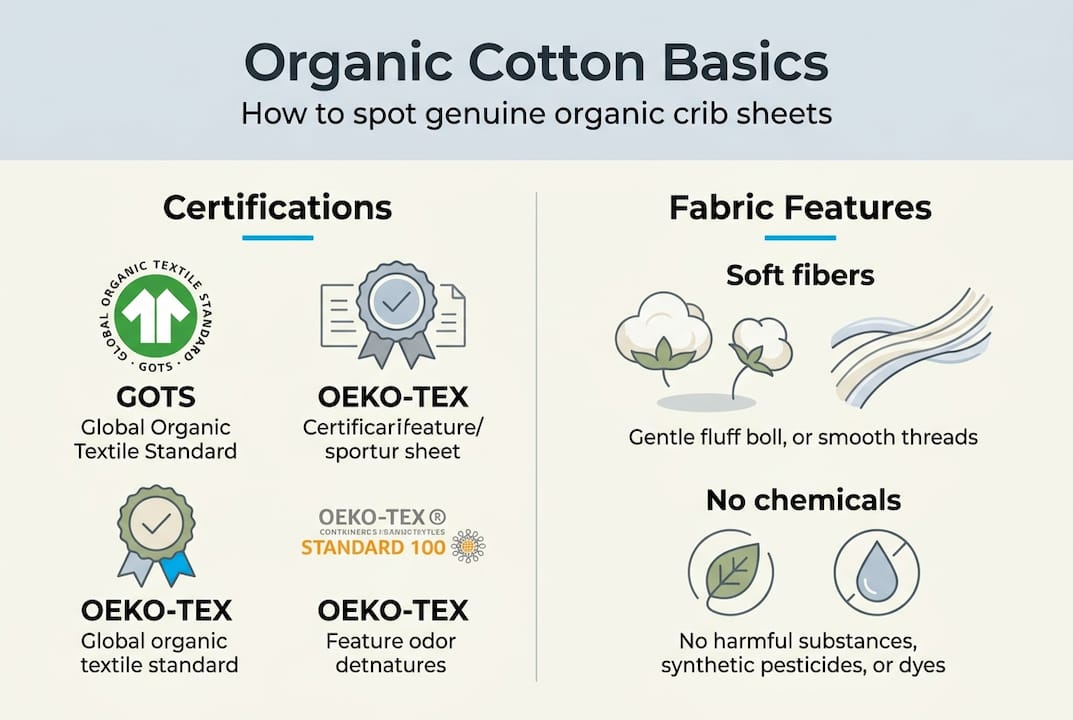
Two certifications set the gold standard:
- GOTS (Global Organic Textile Standard): Covers the entire supply chain, from farming to finished product, including social and environmental criteria.
- OEKO-TEX Standard 100: Tests the final product against over 100 harmful substances, including heavy metals, pesticides, and formaldehyde.
- USDA Organic: Applies to the raw fiber but does not cover processing or dyeing stages.
- Fair Trade Certified: Focuses on ethical labor practices and fair wages throughout production.
Understanding organic cotton basics helps you read labels with confidence and spot the difference between genuine certification and marketing language.
Health and safety advantages of organic crib sheets
Your baby's sleep environment is one of the most important factors in their early development. Conventional bedding can introduce a class of chemicals called SVOCs, or semi-volatile organic compounds. These include phthalates and organophosphate esters (OPEs), which are linked to hormone disruption, allergies, and skin irritation.
Research shows that SVOC exposure from conventional bedding is measurably higher than from organic alternatives, and babies are especially vulnerable because they breathe closer to the mattress surface and spend more time in contact with fabric than older children or adults.
"Certifications like GOTS and OEKO-TEX guarantee testing against over 100 harmful substances, giving parents a reliable safety benchmark."
The health benefits of organic cotton extend beyond just avoiding chemicals. Organic fibers tend to be softer and more breathable, which helps regulate your baby's body temperature during sleep. For babies prone to skin issues, choosing hypoallergenic crib bedding can make a real difference in comfort and skin health.
Pro Tip: If your baby already shows signs of eczema or sensitive skin, prioritize GOTS-certified sheets over OEKO-TEX alone. GOTS covers the full production chain, reducing the chance of chemical reintroduction during processing.
| Feature | Organic crib sheets | Conventional crib sheets |
|---|---|---|
| Pesticide residues | None (certified) | Possible |
| Synthetic dyes | No | Often yes |
| SVOC exposure | Low | Higher |
| Skin irritation risk | Low | Moderate to high |
| Third-party certification | GOTS, OEKO-TEX | Rarely certified |
| Breathability | High | Varies |
Environmental and ethical impact of organic crib sheets
Choosing organic isn't just about protecting your child. It's also a vote for the kind of world they'll grow up in. Conventional cotton farming is one of the most chemically intensive agricultural practices on the planet. Conventional cotton uses 16 to 25% of the world's insecticides despite representing only 2.5% of global cropland. That chemical load doesn't stay on the farm. It runs into waterways, depletes soil health, and affects farming communities.
Organic cotton farming takes a different approach:
- Uses natural pest control methods instead of synthetic chemicals
- Relies on crop rotation to maintain soil fertility and reduce erosion
- Consumes significantly less water through rain-fed growing practices
- Prohibits genetically modified organisms at every stage
- Supports fair wages and safer working conditions for farm laborers
Many GOTS-certified brands also carry Fair Trade certification, which means the workers who grew and processed your baby's sheets were paid fairly and worked in safe conditions. That's a meaningful layer of accountability.
Pro Tip: Look for brands that publish their supply chain transparency reports. If a company can't tell you where their cotton was grown and processed, that's a red flag worth noting.
Exploring sustainable baby products more broadly can help you build a nursery that's safer for your baby and gentler on the environment at the same time.
Are organic crib sheets worth the price?
Let's be honest: organic crib sheets cost more upfront. You're typically looking at $30 to $60 for a quality organic fitted sheet, compared to $10 to $25 for a conventional option. That's a real difference, especially when you're outfitting a full nursery.
But the math changes when you factor in durability and long-term value. Organic sheets cost 15 to 30% more initially, but they tend to hold up better through repeated washing, meaning you replace them less often. Conventional sheets often pill, shrink, or fade after 20 to 30 washes. A well-made organic sheet can last two to three times longer.
Here's a practical breakdown of what you're actually comparing:
| Factor | Organic | Conventional |
|---|---|---|
| Average price per sheet | $35 to $60 | $10 to $25 |
| Average lifespan (washes) | 80 to 100+ | 20 to 40 |
| Chemical certifications | Yes | Rarely |
| Skin irritation potential | Low | Moderate |
| Replacement frequency | Low | Higher |
Beyond durability, consider the potential health cost savings. Fewer skin reactions, fewer pediatrician visits for eczema flare-ups, and less spending on medicated creams all add up. A deeper look at organic vs conventional crib sheets shows that the total cost of ownership often favors organic over a two-year period.
Here are four reasons parents consistently say the investment is worth it:
- Fewer replacements due to better fabric durability over time
- Reduced medical costs from fewer skin and allergy-related issues
- Peace of mind knowing your baby isn't sleeping on chemically treated fabric
- Resale or reuse value since organic sheets hold up well enough to pass on to a second child
How to identify genuine organic crib sheets
Greenwashing is real, and the baby product market is not immune to it. Brands use words like "natural," "eco-friendly," and "pure" without any third-party verification. These terms have no legal definition in the context of textiles, so they mean nothing without a certification to back them up.
Here's what to actually look for when shopping:
- GOTS logo: Confirms organic fiber content and responsible processing from farm to finished product
- OEKO-TEX Standard 100 label: Confirms the finished product has been tested for harmful substances
- Certification number: Every certified product has a traceable number you can verify on the certifying body's website
- Ingredient transparency: Reputable brands list fiber content, dye type, and finishing treatments
- No vague claims: Avoid sheets marketed as "chemical-free" or "toxin-free" without a certification label
GOTS-certified crib sheets provide full supply chain transparency, which means you can trace the product from the cotton field to your baby's crib. That level of accountability is what separates genuine organic products from clever marketing.
Pro Tip: Use the GOTS public database at global-standard.org to verify any brand's certification status before purchasing. It takes 30 seconds and removes all guesswork.
It's also worth checking whether the sheets are free from flame retardant chemicals. Many conventional sheets are treated with these compounds, which carry their own health risks. Learning about flame-retardant-free baby gear can help you make a fully informed nursery setup. And since crib sheets need frequent washing, confirming they are machine washable without degrading is a practical must.
Find safer crib sheets and essential baby products
Knowing what to look for is the first step. Finding products that actually meet those standards is the next one. At Rivertot, we've curated a range of baby essentials with safety, comfort, and quality at the center of every choice.

From comfortable baby clothes made with gentle fabrics to a protective infant pillow designed for safe sleep positioning, every product is selected with your baby's wellbeing in mind. Whether you're building a nursery from scratch or upgrading what you already have, browsing the full range at Rivertot gives you a reliable starting point. You've done the research. Now it's time to put it into practice with products you can actually trust.
Frequently asked questions
Do organic crib sheets help reduce allergies and eczema?
Yes. Organic crib sheets reduce allergen and chemical exposure, which lowers the risk of eczema flare-ups and allergic reactions, particularly for babies with sensitive or reactive skin.
Are GOTS and OEKO-TEX certifications important for crib sheets?
Absolutely. These certifications confirm that crib sheets have been tested against 100+ harmful substances and meet the highest safety benchmarks available for infant products.
Is the higher price of organic crib sheets justified?
In most cases, yes. Organic sheets offer greater durability and health benefits that offset the higher upfront cost, especially when you factor in fewer replacements and reduced skin-related health expenses.
How can I tell if crib sheets are genuinely organic?
Look for GOTS or OEKO-TEX certification labels with a verifiable certification number. GOTS-certified products provide full supply chain accountability, while vague terms like "natural" or "pure" without certification carry no verified meaning.